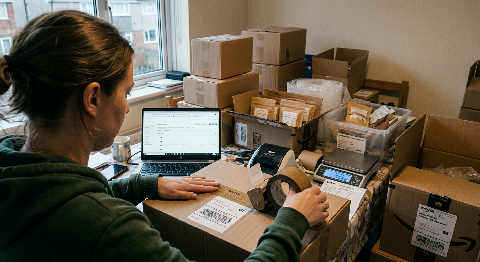
How to Become an Amazon FBA Seller in the UK
Amazon FBA (Fulfilment by Amazon) sellers find or create products, send stock to Amazon's warehouses and let Amazon store, pack, deliver and handle returns. Your job is everything else: product research, sourcing from manufacturers or wholesalers, writing listings, running Amazon ads, managing stock and watching fees and cash flow.
There is no qualification or licence. You register as a business, open an Amazon Seller Central account and buy your first stock. Most new sellers spend the first year learning and reinvesting profit, and plenty of first products never make money, so start small.
Quick facts
- Starting salary
- £0 - £15,000 (year one - mostly reinvested)
- Mid-career salary
- £30,000 - £80,000 net
- Senior salary
- £100,000 - £500,000+ net (or 6-7 figure exits)
- Work environment
- Mostly remote + occasional supplier/warehouse trips
- Time to entry
- 3 - 9 months to first sale
- Degree required
- Not required
- Category
- Self-Employed and Business Owner
Compare pay across careers in the UK salaries by career report. Also in: High-paying careers, No-degree careers, Career change.
What a Amazon FBA Seller does
Source or create products and sell them on Amazon - they handle storage, shipping and returns.
- Private Label Seller - Source generic products and sell under your own brand.
- Wholesale FBA Seller - Buy branded stock from distributors and resell on Amazon.
How to become an amazon FBA seller in the UK
Most UK sellers use one of two models. Private label means designing or customising a product, usually made by an overseas manufacturer, and selling it under your own brand. Wholesale means buying existing branded stock from authorised distributors and reselling it. Either way, register as self-employed with HMRC or set up a limited company, open a Professional seller account, and check product safety, labelling and category approval rules before you order. Register for VAT if your taxable turnover goes over the VAT threshold.
- Read Amazon's UK fee pages and use its revenue calculator to work out referral fees, FBA fulfilment fees and storage costs before choosing a product.
- Research products with steady demand, manageable competition and enough margin after fees, ads and returns, and avoid fragile, seasonal or heavily regulated items at first.
- Register as a sole trader with HMRC or set up a limited company, and open a separate business bank account to track stock spending.
- Order samples from several suppliers, check quality yourself, and confirm the product meets UK safety and labelling rules, including UKCA or CE marking where required.
- Open a Seller Central Professional account, write your listing with clear photos and search-friendly copy, and book your first shipment into an Amazon warehouse.
- Start with a small first order you can afford to lose, run modest Amazon PPC campaigns, and track your true profit per unit every week.
- Register a UK trade mark if you plan to build a private label brand, so you can enrol in Amazon Brand Registry and protect your listings.
| Route | How long | Cost | Best for |
|---|---|---|---|
| Private label | 3-9 months to first sale | Varies - samples, stock, photos and ads | Building your own brand |
| Wholesale | 1-6 months to first sale | Varies - mostly stock | Lower product development risk |
| Side business alongside a job | 6-12 months to test | Small first orders | Testing the model without quitting |
| E-commerce job first | 1-2 years | None - paid role | Learning Amazon with someone else's budget |
How long it takes
Expect 3 to 9 months from starting product research to your first sale, mostly spent finding a product, sampling suppliers and waiting for manufacturing and shipping. Wholesale sellers can often list sooner because the products already exist.
Amazon FBA Seller salary in the UK
Income from Amazon FBA is profit, not salary, and it varies hugely. In year one many sellers make between nothing and about £15,000, because most profit goes back into stock. Established sellers with a few reliable products typically net £30,000 to £80,000 a year. A small number build brands netting £100,000 to £500,000 or more, and some sell the business. Margins depend on Amazon fees, advertising, returns, supplier prices and exchange rates, and a stockout or listing suspension can wipe out a month's profit.
Key skills
- Product research
- Sourcing (Alibaba)
- Amazon SEO
- PPC ads
- Cashflow management
Amazon FBA Seller FAQs
How do I become an Amazon FBA seller in the UK?
Register as a sole trader or limited company, open an Amazon Seller Central Professional account, research a product with enough margin after fees, source stock from a reliable supplier and send it to an Amazon warehouse. Start with a small order and track profit per unit closely.
Do I need any qualifications to sell on Amazon FBA?
No. There are no required qualifications. What matters is product research, supplier management, Amazon advertising and cash flow control. You do need to register with HMRC, follow product safety and labelling law, and register for VAT if your taxable turnover passes the threshold.
How much do Amazon FBA sellers earn in the UK?
Year one is often between nothing and around £15,000, with most profit reinvested. Established sellers typically net £30,000 to £80,000, and a minority build businesses netting £100,000 to £500,000 or more. Plenty of first products lose money, so test small.
How much money do you need to start Amazon FBA?
It depends on the product. You need money for samples, your first stock order, shipping, Amazon fees, photos and advertising, plus a buffer for slow months. Work out the landed cost per unit and choose an order size you could afford to lose.
Related careers
Is Amazon FBA Seller right for you?
Career Compass ranks careers from your interests and priorities and explains every suggestion, with UK routes and trade-offs. See how well Amazon FBA Seller actually fits you. £19.99 once, full report included.
Not sure amazon FBA seller is the right career for you? A good career test narrows the field before you spend money retraining.