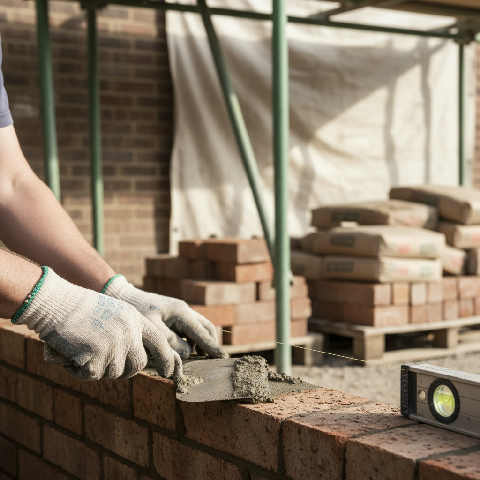
How to Become a Bricklayer (UK): Salary, Skills & Career Guide
Bricklaying is one of the fastest-paid trades in the UK once you're qualified. Sub-contracting brickies on price-work can clear £50,000-£80,000+ a year, and the route in is well-defined: apprenticeship or fast-track course plus on-site experience.
In this guide, you'll learn exactly how to become a bricklayer in the UK, what you can realistically earn, and whether the trade and the physical toll are right for you.
Quick facts
- Starting salary
- £20,000 - £28,000 (apprentice/labourer)
- Mid-career salary
- £32,000 - £45,000
- Senior salary
- £50,000 - £80,000+ (self-employed/sub-contracting)
- Work environment
- Sites, outdoors, all weather
- Time to entry
- 2 - 4 years (apprenticeship or fast-track course + site time)
- Degree required
- Not required (CSCS card required)
- Category
- Skilled Trades
Compare pay across careers in the UK salaries by career report. Also in: High-paying careers, No-degree careers, Career change.
What a Bricklayer does
Build walls, structures, and chimneys with bricks, blocks, and stone.
- Heritage / Stonemason - Restoration work on listed buildings and stone structures.
- Sub-contract Brickie - Price-work on new-build estates - higher earnings if fast.
How to become a bricklayer in the UK
The standard route is a Level 2 bricklaying apprenticeship over 2-3 years, combining paid on-site work with college. Adult career-changers often go through a fast-track course (typically 6-16 weeks) at a local college, then find on-site work as a labourer or improver to build the experience needed for full NVQ sign-off.
- Pass the CITB Health, Safety and Environment test, then apply for a CSCS card so you can work on construction sites legally.
- Apply for a Level 2 bricklaying apprenticeship with a housebuilder, contractor or local builder, or enrol on a full-time college bricklaying course.
- If you are changing career, take a fast-track bricklaying course, then get on site as a labourer or improver to build speed and experience.
- Practise setting out, gauging courses, cutting bricks and pointing until your work is straight, plumb and level at a steady pace.
- Complete your Level 2 NVQ in trowel occupations through on-site assessment, then upgrade to the blue CSCS skilled worker card.
- Once you are fast and reliable, consider price-work or sub-contracting, or add heritage and stonework skills for specialist projects.
| Route | How long | Cost | Best for |
|---|---|---|---|
| Level 2 bricklaying apprenticeship | 2-3 years | Paid by the employer | School leavers and young starters |
| Fast-track course, then site work | 1-2 years | Varies by provider | Adult career changers |
| Labourer to improver on site | 2-4 years | Paid while you learn | People already working in construction |
How most people actually get started
Most bricklayers start through an apprenticeship straight from school, but a sizeable share are adult career-changers from labouring backgrounds. The fast-track route - a few months of intensive college work followed by a labouring or improver role on a building site - is realistic if you can take the lower pay during training. The trade rewards speed and consistency more than any qualification once you're working price-work.
How long it takes
You can be on site as a labourer within weeks once you have a CSCS card. Becoming a fully qualified bricklayer with a Level 2 NVQ takes two to three years through an apprenticeship, or one to two years via a fast-track course plus site experience.
Bricklayer salary in the UK
Bricklayer pay scales fast for those willing to work price-work on new-build sites. Apprentices and labourers start at £18,000-£26,000, qualified brickies on day rate earn £30,000-£42,000, and sub-contracting brickies on price-work regularly clear £50,000-£80,000+ on busy sites.
Is bricklayer a good career?
Bricklaying is a strong trade career in the UK. There's a persistent skills shortage, demand from new-build housing is consistent, and price-work earnings can be excellent for fast, reliable brickies. The trade-offs are the physical toll over a 30-year career, and the fact that earnings cap out unless you grow into running a small gang.
Key skills
- Trowel work
- Stamina
- Spirit-level accuracy
- Reading drawings
- Mortar mixing
Bricklayer FAQs
How do I become a bricklayer in the UK with no experience?
The standard route is a Level 2 bricklaying apprenticeship - you apply through colleges or building firms. Adult career-changers can take a fast-track course (typically 6-16 weeks at a local college) and find on-site work as a labourer or improver to build the experience needed for full NVQ sign-off. A CSCS card is needed to be on a site.
How much do bricklayers earn per day in the UK?
Bricklayers on day rate typically earn £160-£220 per day. Sub-contracting brickies on price-work (paid per thousand bricks laid) regularly clear £200-£350 per day on busy new-build estates, and the fastest brickies push higher.
Is bricklaying hard work?
Yes - bricklaying is one of the more physically demanding trades. You're outdoors in all weather, lifting bricks and blocks all day, and the repetitive movements take a real toll on the back, knees and shoulders over decades.
Can I become a bricklayer at 30, 40 or older?
Yes - plenty of bricklayers start in their 30s or 40s, often via a fast-track course and labouring on-site. The challenge is the physical demand: starting later means your body has fewer years to adapt before wear catches up.
Is bricklaying a good career?
Bricklaying is a strong career if you want fast, well-paid trade work without a degree and you're prepared for the physical demand. Demand is consistent, price-work earnings can be excellent, and self-employment is the norm. Career Compass, our one-off career direction assessment, shows how closely it matches your interests and priorities.
Is Bricklayer right for you?
Career Compass ranks careers from your interests and priorities and explains every suggestion, with UK routes and trade-offs. See how well Bricklayer actually fits you. £19.99 once, full report included.
Not sure bricklayer is the right career for you? A good career test narrows the field before you spend money retraining.