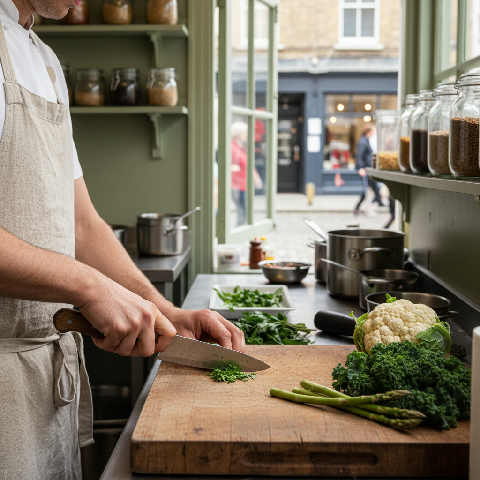
How to become a chef
Becoming a chef in the UK doesn't require a degree, and the route in is more flexible than most people assume. Entry-level pay sits around £24,000 - £27,000, mid-career roles earn £28,000 - £42,000, senior or specialist chefs earn £50,000 - £100,000+ (head / exec chef). This guide covers the realistic route in, what you can earn employed and self-employed, and whether the work fits how you like to spend your day.
Quick facts
- Starting salary
- £24,000 - £27,000 (commis)
- Mid-career salary
- £28,000 - £42,000 (chef de partie / sous)
- Senior salary
- £50,000 - £100,000+ (head / exec chef)
- Work environment
- Kitchen - hot, fast, evenings and weekends
- Time to entry
- 2 - 5 years
- Degree required
- Not required
- Category
- Hospitality and Food
Compare pay across careers in the UK salaries by career report. Also in: High-paying careers, No-degree careers, Creative careers, Stable careers, Career change.
What a Chef does
Cook and lead in professional kitchens - restaurants, hotels, or private settings.
- Line Cook - Run a station in a busy professional kitchen.
- Sous Chef - Second-in-command, supports the head chef.
- Pastry Chef - Specialise in desserts, breads, and patisserie.
- Private Chef - Cook for individuals, families, or events.
- Head Chef - Run a kitchen - menu, team, costs.
How to become a chef in the UK
You don't need a degree to become a chef in the UK. The most reliable route is a mix of short formal training (college course, apprenticeship, or industry-recognised certification) and hands-on experience as quickly as possible - typically through an entry-level role, apprenticeship, or paid work-shadowing. Most people get their first proper role within 2 - 5 years once they commit to the path.
- Get a kitchen porter or commis chef job, or a Level 2 Commis Chef apprenticeship, to learn how a professional kitchen runs.
- Take a Level 2 food hygiene certificate for catering and complete allergen training, which the Food Standards Agency offers free online.
- Consider a Level 2 or 3 professional cookery diploma at college if you want structured training in knife skills, sauces, butchery and pastry.
- Work every section you can, from larder to sauce and pastry, and build speed and organisation during busy services.
- Move up to chef de partie, through a Level 3 Chef de Partie apprenticeship or on the job, and run a section on your own.
- Learn the management side, such as ordering, stock control, food costs, rotas and HACCP-based food safety systems, before stepping up to sous chef.
- Choose your direction, such as fine dining, hotels, contract catering, pastry or private chef work, which shapes your hours and pay.
| Route | How long | Cost | Best for |
|---|---|---|---|
| Commis chef apprenticeship (Level 2) | 12-18 months | Paid by the employer | School leavers and career changers |
| College professional cookery diploma | 1-2 years | Free for many under-19s; otherwise varies | Structured training before work |
| Start as kitchen porter or commis | Weeks to start | Paid | Learning on the job straight away |
| Chef de partie apprenticeship (Level 3) | 12-18 months | Paid by the employer | Commis chefs ready to step up |
How long it takes
You can start as a kitchen porter or commis chef within weeks. Most chefs take two to five years to reach chef de partie or sous chef level, depending on how quickly they move through the sections.
Chef salary in the UK
Entry-level chef roles in the UK pay £24,000 - £27,000 (commis). Mid-career chefs earn £28,000 - £42,000 (chef de partie / sous). Senior or specialist chefs earn £50,000 - £100,000+ (head / exec chef). Pay varies by region (London and the South East typically sit at the top of the range), employer, and specialism. Self-employed chefs set their own rates and can earn meaningfully more per hour than employed equivalents once they have a steady client base, though year one income is typically lower while you build up.
Is chef a good career?
Chef can be a strong career choice in the UK if it matches how you actually like to work. On stability: strong demand, high turnover industry. Competition for roles is generally moderate. Day-to-day environment: kitchen - hot, fast, evenings and weekends. The honest answer depends on your personality and priorities - the trade-offs (hours, responsibility, pace) matter as much as the salary.
Key skills
- Knife skills
- Speed
- Stamina
- Calm under pressure
Will chefs be replaced by AI?
Low exposure. No. Cooking to a standard in a busy kitchen is physical, creative and fast. AI may help with ordering, costing and menu ideas, but the job happens at the pass.
The DfE study found accommodation and food services among the UK sectors least exposed to AI.
What AI already does in this job
- Menu costing and ordering
- Recipe and menu ideas
- Rotas and stock
What stays with a person
- Cooking and plating under pressure
- Taste and creative judgement
- Running a kitchen team
Low exposure, but long hours. Specialisms like pastry, or moving into running venues, add pay.
Related careers that are also hard to automate
- Pastry Chef - specialist kitchen craft
- Hotel Manager - hospitality leadership
- Event Manager - live hospitality and events
More on AI and work: check another job, jobs AI will replace, AI-proof jobs.
Our rating judges how much of the role's everyday work current AI tools can already do or draft; it measures exposure, not job losses. Occupation findings are from the Department for Education, The impact of AI on UK jobs and training (November 2023).
Chef interview questions
Often a short interview followed by a trial shift or cook-off, which matters more than the questions.
- What would you cook for us? What they are looking for: Your style, skill level and understanding of their menu.
- How do you handle a busy service when things go wrong? What they are looking for: Staying calm, communicating and keeping standards.
- How do you manage food safety and allergens? What they are looking for: Practical knowledge of hygiene, temperature control and allergen procedures.
- How do you keep food costs under control? What they are looking for: Portion control, waste and stock rotation, especially for senior roles.
- Where do you want to be in five years? What they are looking for: Ambition, and whether you will stay long enough to be worth training.
If you are changing career: Kitchens care about what you can do on the trial shift. Show commitment through training, a food hygiene certificate and any experience, and expect to start at commis level.
Chef CV
A short one-page CV. Kitchens decide on the trial shift, not the CV.
What to lead with
- Kitchens and roles: commis, chef de partie, sous chef
- Cuisines and techniques you are strong in
- Food hygiene certificate and any culinary qualifications
Career changer CV: Include cookery courses, catering for events, and any hospitality work. Enthusiasm and reliability count for a lot at entry level.
Still deciding whether this is the move? The Career Change assessment works out how big a change you actually need before you start applying.
Chef FAQs
How do I become a chef in the UK?
You don't need a degree to become a chef in the UK. The most reliable route is a mix of short formal training (college course, apprenticeship, or industry-recognised certification) and hands-on experience as quickly as possible - typically through an entry-level role, apprenticeship, or paid work-shadowing. Most people get their first proper role within 2 - 5 years once they commit to the path.
How much do chefs earn in the UK?
Entry-level chef roles in the UK pay £24,000 - £27,000 (commis). Mid-career chefs earn £28,000 - £42,000 (chef de partie / sous). Senior or specialist chefs earn £50,000 - £100,000+ (head / exec chef). Pay varies by region (London and the South East typically sit at the top of the range), employer, and specialism. Self-employed chefs set their own rates and can earn meaningfully more per hour than employed equivalents once they have a steady client base, though year one income is typically lower while you build up.
Do you need a degree to be a chef?
No - you don't need a degree to become a chef in the UK. The official line: not required. Employers and clients care more about demonstrable skill, hands-on experience, and the right attitude than formal qualifications.
Is chef a good career in the UK?
Chef can be a strong career choice in the UK if it matches how you actually like to work. On stability: strong demand, high turnover industry. Competition for roles is generally moderate. Day-to-day environment: kitchen - hot, fast, evenings and weekends. The honest answer depends on your personality and priorities - the trade-offs (hours, responsibility, pace) matter as much as the salary.
Is Chef right for you?
Career Compass ranks careers from your interests and priorities and explains every suggestion, with UK routes and trade-offs. See how well Chef actually fits you. £19.99 once, full report included.
Still deciding whether chef is the career for you? Here is which career test is actually worth taking, and what a free quiz will not tell you.