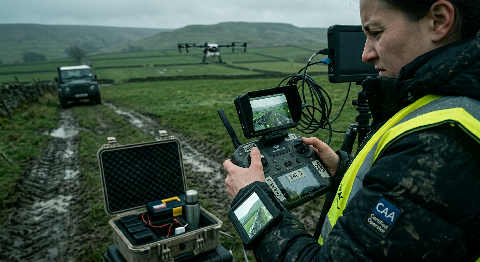
How to Become a Drone Operator in the UK
Drone operators fly remotely piloted aircraft for paid work: roof and bridge inspections, land and construction surveys, thermal imaging, agriculture, film and TV, and some police and fire service roles. The flying is only part of it. You also plan each job, check airspace, write risk assessments and process the images or data afterwards.
The route in is short compared with most aviation jobs. You register with the Civil Aviation Authority (CAA), pass the training your type of flying needs, such as the A2 CofC or the GVC, arrange insurance, and then build hours and a portfolio in one sector.
Quick facts
- Starting salary
- £25,000 - £32,000
- Mid-career salary
- £32,000 - £45,000
- Senior salary
- £45,000 - £70,000
- Work environment
- Outdoor sites across the UK
- Time to entry
- 1 - 3 months (CAA A2 / GVC)
- Degree required
- Not required
- Category
- Aviation and Aerospace
Compare pay across careers in the UK salaries by career report. Also in: No-degree careers, Career change.
What a Drone Operator does
Pilot commercial drones for survey, inspection, film, agriculture or emergency services work.
How to become a drone operator in the UK
Drone flying in the UK is regulated by the CAA, and most commercial work needs a CAA Flyer ID and Operator ID. The A2 Certificate of Competency (A2 CofC) lets you fly closer to people in the Open category. The General Visual Line of Sight Certificate (GVC), taken through a CAA Recognised Assessment Entity, is the usual step towards an Operational Authorisation for more complex work in the Specific category. You also need suitable insurance for commercial flying. Survey, inspection and broadcast employers often value a background in construction, surveying, GIS or photography as much as the flying certificate.
- Register with the CAA for an Operator ID and pass the online theory test for a Flyer ID before flying any drone that needs them.
- Take the A2 CofC so you can fly a suitable drone closer to people, and log every practice flight with the date, location and conditions.
- Complete a GVC with a CAA Recognised Assessment Entity, including the practical flight assessment, if you plan to apply for an Operational Authorisation.
- Arrange commercial drone insurance, and write an operations manual and a risk assessment template you can adapt for each site.
- Pick one sector, such as roof inspection, construction progress surveys, thermal imaging or property photography, and learn the software and outputs those clients expect.
- Build a portfolio of real jobs, starting with small paid work for estate agents, roofers or local builders, before approaching survey and inspection firms.
- Add skills that raise your value, such as photogrammetry and mapping software, thermography training, or a CSCS card for working on construction sites.
| Route | How long | Cost | Best for |
|---|---|---|---|
| A2 CofC and Open category work | A few weeks | Varies by provider | Photography and lighter commercial work |
| GVC and CAA Operational Authorisation | 1-3 months | Varies by provider, plus CAA fees | Survey, inspection and broadcast work |
| Join a survey or inspection firm | Varies | Often employer-funded training | Surveyors, engineers and construction staff |
How long it takes
You can register with the CAA and complete an A2 CofC or GVC within one to three months. Steady paid work usually takes longer, because clients want to see a portfolio and logged flying experience.
Drone Operator salary in the UK
Employed drone operators usually start on around £25,000 to £32,000. With experience and a specialism, pay typically rises to £32,000 to £45,000, and senior pilots, team leads or specialists in infrastructure inspection can earn £45,000 to £70,000. Many operators are self-employed and charge by the job or day, so income depends on steady client work, the season, and the cost of kit and insurance. Survey and inspection work tends to pay better than general photography, and some operators move into a drone surveyor role.
Key skills
- CAA regulations
- Spatial awareness
- Photography basics
- Risk assessment
Drone Operator FAQs
How do I become a drone operator in the UK?
Register with the CAA for a Flyer ID and Operator ID, take the A2 CofC or the GVC depending on the work you want, and arrange commercial insurance. Then build experience and a portfolio in one sector, such as inspection, surveying or filming.
Do I need a licence to fly a drone commercially in the UK?
There is no single drone licence. You need the right CAA registrations and competency certificates for the category you fly in. Some work fits the Open category with an A2 CofC, but more complex jobs need a CAA Operational Authorisation, which usually requires a GVC first.
How much does a drone operator earn?
Starting pay is around £25,000 to £32,000, rising to £32,000 to £45,000 with experience. Senior or specialist operators earn around £45,000 to £70,000. Self-employed pilots' income varies with the number of jobs they win and their equipment and insurance costs.
Which drone jobs pay best?
Survey, infrastructure inspection, thermal imaging and specialist film work usually pay more than estate agent photography, because they need extra training, better equipment and knowledge of the client's industry. A background in construction, surveying or engineering helps you win this work.
Is Drone Operator right for you?
Career Compass ranks careers from your interests and priorities and explains every suggestion, with UK routes and trade-offs. See how well Drone Operator actually fits you. £19.99 once, full report included.
Not sure drone operator is the right career for you? A good career test narrows the field before you spend money retraining.