How to Become an Exhibition Designer in the UK
Exhibition designers plan and design physical spaces that people walk through, including trade show stands, museum and gallery exhibitions, visitor centres and brand activations. You turn a client brief and budget into layouts, 3D visuals and technical drawings, choose materials, lighting and graphics, and work with builders and installers to deliver on time.
There is no required qualification, but most designers have a degree or diploma in spatial, interior, 3D or product design, or architecture. Employers hire on portfolio, so strong 3D visuals and evidence of built projects matter more than the certificate. Expect one to three years to reach a full designer role.
Quick facts
- Starting salary
- £26,000 - £36,000
- Mid-career salary
- £40,000 - £58,000
- Senior salary
- £65,000 - £95,000
- Work environment
- Office, studio or remote
- Time to entry
- 1 - 3 years
- Degree required
- Not required - portfolio matters most
- Category
- Marketing and Media
Compare pay across careers in the UK salaries by career report. Also in: High-paying careers, No-degree careers, Creative careers, Career change.
What a Exhibition Designer does
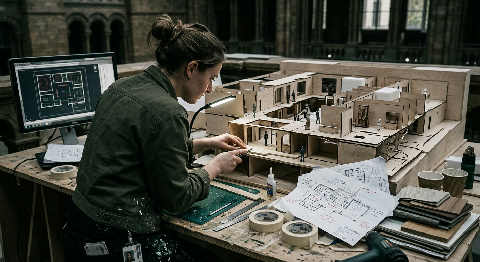
Design exhibition stands, museum installations and experiential brand activations.
How to become an exhibition designer in the UK
Most exhibition designers study spatial design, interior design, 3D design, product design or architecture, then join an exhibition design studio, stand builder or museum design team as a junior or CAD technician. You need confident skills in 3D modelling and drawing software, such as SketchUp, Vectorworks, AutoCAD, 3ds Max or Cinema 4D, plus Adobe tools for graphics. Knowledge of materials, structural limits, accessibility and venue rules is essential. Membership of a professional body such as the Chartered Society of Designers is optional. Some designers move across from set design, interiors or graphics.
- Learn 3D modelling and rendering in tools used by exhibition studios, such as SketchUp, Vectorworks, 3ds Max or Cinema 4D.
- Build a portfolio of three to five spatial projects, including floor plans, elevations, 3D visuals and notes on materials and budget.
- Visit trade shows, museums and brand events, and sketch how layout, sightlines, lighting and visitor flow work in each space.
- Apply for junior designer, CAD technician or design assistant roles with exhibition contractors, museum design studios and experiential agencies.
- Learn the practical side, including venue rules, fire safety of materials, accessibility, build schedules and how stands are transported and installed.
- Ask to attend builds and installations so you can see how your drawings become real structures and learn from the build crew.
| Route | How long | Cost | Best for |
|---|---|---|---|
| Degree in spatial, interior or 3D design | 3 years | Tuition fee loan | School leavers |
| Junior or CAD technician at a stand builder | 1-3 years | Free | People with strong 3D software skills |
| Move across from interior, set or graphic design | 6-18 months | Software courses vary | Working designers |
How long it takes
Expect one to three years, as graduates usually spend that time as juniors or CAD technicians before leading projects. People who have worked as an interior designer or set designer can sometimes step into designer roles sooner.
Exhibition Designer salary in the UK
Exhibition designers start on around £26,000 to £36,000, rising to roughly £40,000 to £58,000 for experienced designers who lead projects. Senior designers, design managers and creative directors earn about £65,000 to £95,000. Commercial trade show and brand experience agencies, especially in London, usually pay more than museums and heritage organisations. Freelance designers are common, and their income depends on day rates and how steady the flow of projects is.
Key skills
- 3D design
- Spatial thinking
- Materials
- Client comms
- Project mgmt
Exhibition Designer FAQs
How do I become an exhibition designer?
Study spatial, interior or 3D design, or teach yourself the main 3D tools, and build a portfolio of spatial projects. Start as a junior designer or CAD technician at a stand builder, museum design studio or experiential agency, then progress to leading projects.
Do you need a degree to be an exhibition designer?
Not strictly. Most designers have one, but studios hire on portfolio and software skills. If you can show strong 3D visuals, technical drawings and an understanding of how stands are built, you can get in without a degree.
How much do exhibition designers earn?
Exhibition designers earn around £26,000 to £36,000 at the start and about £40,000 to £58,000 with experience. Senior designers and creative directors earn around £65,000 to £95,000, and commercial agencies usually pay more than museums.
What software do exhibition designers use?
Common tools include SketchUp, Vectorworks, AutoCAD, 3ds Max and Cinema 4D for 3D design and drawings, plus Adobe Illustrator, Photoshop and InDesign for graphics. Each studio has its own preferences, so check job adverts for the tools they list.
Is Exhibition Designer right for you?
Career Compass ranks careers from your interests and priorities and explains every suggestion, with UK routes and trade-offs. See how well Exhibition Designer actually fits you. £19.99 once, full report included.
Not sure exhibition designer is the right career for you? A good career test narrows the field before you spend money retraining.