How to become a handyman / property maintenance
Working as a handyman in the UK is a self-employment path with low entry barriers, no formal qualification requirement, and strong income potential once you have repeat clients. Entry-level pay sits around £22,000 - £32,000, mid-career roles earn £32,000 - £45,000, senior or specialist handymans earn £45,000 - £65,000. This guide covers the realistic route in, what you can earn at each stage, and whether the work fits how you like to spend your day.
Quick facts
- Starting salary
- £22,000 - £32,000
- Mid-career salary
- £32,000 - £45,000
- Senior salary
- £45,000 - £65,000
- Work environment
- Customer homes, mostly indoors, some outdoor
- Time to entry
- Immediate - no formal qualifications required
- Degree required
- Not required
- Category
- Self-Employed and Business Owner
Compare pay across careers in the UK salaries by career report. Also in: No-degree careers, Career change.
What a Handyman / Property Maintenance does
Tackle the small jobs every household needs - shelving, flat-pack, leaks, doors, painting, fence panels.
- Property Maintenance for Landlords - Recurring contracts maintaining rental properties - the highest-stability handyman model.
- Disability / Mobility Adaptations - Install grab rails, ramps, stair rails and other home adaptations for older or disabled homeowners.
How to become a handyman / property maintenance in the UK
There's no formal qualification needed to start as a handyman in the UK - clients hire on results and trust, not credentials. The realistic path: define a narrow service, set up the basics (HMRC sole trader registration, simple website, contract template, the right insurance for your service), then focus on landing your first 2-3 paying clients via direct outreach, referrals, and a small but visible online presence. Most people land their first paid work almost immediately if they treat it as a sales project, not a learning project.
- Decide which jobs you'll offer, such as flat-pack assembly, shelves, doors, minor plumbing or painting, and which you'll refer to registered trades.
- Never do gas work unless you are on the Gas Safe Register, and in England and Wales leave notifiable electrical work to a registered electrician or building control sign-off.
- Register as a sole trader with HMRC and take out public liability insurance before your first paid job.
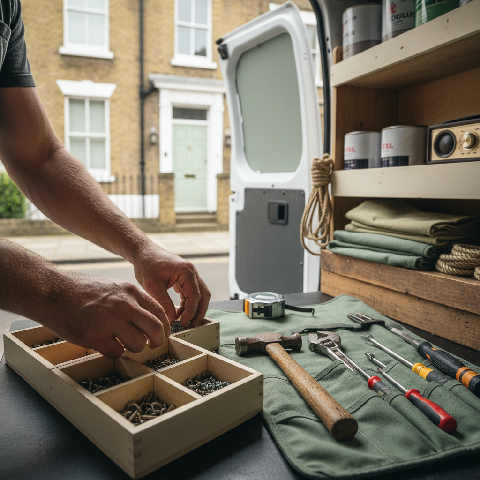
- Build a kit of reliable power tools, a stud and cable detector, fixings and dust sheets so you can finish most small jobs in one visit.
- Set clear pricing, such as an hourly rate with a minimum charge or fixed prices per job, and send written quotes before starting.
- Win your first customers through neighbours, local social media groups, trade directory listings and letting agents, and ask every happy customer for a review.
- Add a specialism such as landlord maintenance contracts or disability and mobility adaptations to get repeat, higher-value work.
| Route | How long | Cost | Best for |
|---|---|---|---|
| Start self-employed straight away | Immediate | Tools and insurance, a few hundred pounds upwards | Practical people with solid DIY skills |
| Short property maintenance or multi-trade course | Weeks to months | Varies by provider | Beginners wanting structured basics |
| Work for a maintenance company or housing provider first | 6-24 months | None, paid work | Building experience before going solo |
| Move across from a single trade | Immediate | Low | Qualified carpenters, decorators or plumbers |
How long it takes
You can start straight away, as no formal qualifications are required. Most people land their first paid jobs within weeks once they have insurance, basic tools and a way for local customers to find them.
Handyman / Property Maintenance salary in the UK
Entry-level handyman roles in the UK pay £22,000 - £32,000. Mid-career handymans earn £32,000 - £45,000. Senior or specialist handymans earn £45,000 - £65,000. Pay varies by region (London and the South East typically sit at the top of the range), employer, and specialism.
Is handyman / property maintenance a good career?
Handyman work can be a strong career choice in the UK if it matches how you actually like to work. On stability: strong - every household needs small jobs done. Competition for roles is generally moderate. Day-to-day environment: customer homes, mostly indoors, some outdoor. The honest answer depends on your personality and priorities - the trade-offs (hours, responsibility, pace) matter as much as the salary.
Key skills
- Practical problem-solving
- Multiple trade basics
- Customer rapport
- Pricing per job
- Time-blocking your day
Handyman / Property Maintenance FAQs
How do I become a handyman in the UK?
There's no formal qualification needed to start as a handyman in the UK - clients hire on results and trust, not credentials. The realistic path: define a narrow service, set up the basics (HMRC sole trader registration, simple website, contract template, the right insurance for your service), then focus on landing your first 2-3 paying clients via direct outreach, referrals, and a small but visible online presence. Most people land their first paid work almost immediately if they treat it as a sales project, not a learning project.
How much do handymans earn in the UK?
Entry-level handyman roles in the UK pay £22,000 - £32,000. Mid-career handymans earn £32,000 - £45,000. Senior or specialist handymans earn £45,000 - £65,000. Pay varies by region (London and the South East typically sit at the top of the range), employer, and specialism.
Do you need a degree to be a handyman?
No - you don't need a degree to become a handyman in the UK. The official line: not required. Employers and clients care more about demonstrable skill, hands-on experience, and the right attitude than formal qualifications.
Is handyman a good career in the UK?
Handyman work can be a strong career choice in the UK if it matches how you actually like to work. On stability: strong - every household needs small jobs done. Competition for roles is generally moderate. Day-to-day environment: customer homes, mostly indoors, some outdoor. The honest answer depends on your personality and priorities - the trade-offs (hours, responsibility, pace) matter as much as the salary.
Is Handyman / Property Maintenance right for you?
Career Compass ranks careers from your interests and priorities and explains every suggestion, with UK routes and trade-offs. See how well Handyman / Property Maintenance actually fits you. £19.99 once, full report included.
Not sure handyman / property maintenance is the right career for you? A good career test narrows the field before you spend money retraining.