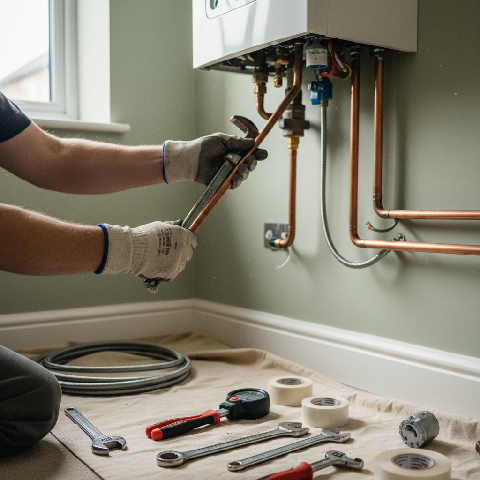
How to become a heating and gas engineer
Heating and gas engineering is one of the highest-paying trades in the UK and one of the most secure - every UK home with a gas boiler needs a Gas Safe-registered engineer. Qualified heating engineers employed by firms earn £35,000-£55,000, and self-employed Gas Safe engineers running their own work regularly clear £60,000-£100,000+, with specialist commercial and renewable heat (heat pump) installers earning more again.
In this guide, you'll learn how to become a heating and gas engineer in the UK, what you can realistically earn, and whether the trade fits you.
Quick facts
- Starting salary
- £24,000 - £32,000
- Mid-career salary
- £35,000 - £50,000
- Senior salary
- £55,000 - £80,000+ (self-employed)
- Work environment
- Customer homes, vans, all weather
- Time to entry
- 2 - 4 years (apprenticeship + Gas Safe)
- Degree required
- Not required - Gas Safe registration essential
- Category
- Skilled Trades
Compare pay across careers in the UK salaries by career report. Also in: High-paying careers, No-degree careers, Stable careers, Career change.
What a Heating and Gas Engineer does
Install, service, and repair gas boilers and heating systems in homes and businesses.
- Heat Pump Installer - Install renewable heat pumps - growing area with grants.
How to become a heating and gas engineer in the UK
The standard route is a Level 3 Plumbing and Domestic Heating apprenticeship (3-4 years, paid) followed by ACS (Accredited Certification Scheme) gas qualifications and Gas Safe registration. Adult career-changers often qualify via a Managed Learning Programme (MLP) - typically 12-18 months full-time at a private training centre - then complete a portfolio of supervised work to gain ACS certification. Heat pump qualifications (MCS, BPEC) sit on top and are increasingly important.
- Choose your route: a Level 3 plumbing and heating apprenticeship with a gas option if you are a school leaver, or a Managed Learning Programme if you are changing career.
- Secure a placement with a Gas Safe registered engineer or heating company, as you need supervised on-site experience to complete your portfolio.
- Pass your ACS assessments, starting with core domestic gas safety (CCN1) and then appliance modules such as CENWAT for boilers and water heaters.
- Register with the Gas Safe Register, which is a legal requirement before you work on any gas appliance, and carry your ID card on every job.
- Add an unvented hot water qualification and learn the water regulations, as many modern boiler and cylinder installs need them.
- Take a recognised heat pump qualification and gain experience with an MCS-certified installer so you can take on low-carbon heating work.
- Renew your ACS certificates every five years, and consider commercial gas qualifications later to move into higher-paid commercial work.
| Route | How long | Cost | Best for |
|---|---|---|---|
| Level 3 plumbing and heating apprenticeship with gas | 3-4 years | Paid by the employer | School leavers |
| Managed Learning Programme, then ACS | 12-18 months full-time, plus portfolio | Self-funded, varies by provider | Adult career changers |
| Qualified plumber adding gas | 6-12 months | Varies by provider | Plumbers wanting gas work |
| Heat pump qualification on top of gas | Days to weeks | Varies by provider | Gas engineers moving into low-carbon heating |
How long it takes
School leavers usually take three to four years through an apprenticeship to reach Gas Safe registration. Career changers on a Managed Learning Programme typically qualify in 12 to 18 months plus portfolio time, so around two years is a realistic target.
Heating and Gas Engineer salary in the UK
Apprentices and trainees earn £15,000-£22,000. Qualified heating engineers employed by firms typically earn £35,000-£55,000. Self-employed Gas Safe engineers running their own domestic work regularly clear £60,000-£100,000, with commercial gas engineers and heat pump installers earning £70,000-£120,000+. Day rates for self-employed engineers typically sit at £250-£400 for domestic work and £400-£700 for commercial.
Is heating and gas engineer a good career?
Heating and gas engineering is one of the strongest UK trade careers. Demand is structural (every gas boiler needs annual servicing and eventual replacement), the heat pump transition is creating new well-paid specialist work, and the path to self-employment is well-trodden and high-earning. Trade-offs are real: the qualification route is longer than most trades, the responsibility of working with gas is significant (mistakes can kill), and physical work in lofts, under floors and in tight cupboards takes a toll.
Key skills
- Diagnostics
- Customer skills
- Safety awareness
- Problem solving
How to retrain as a gas engineer
To work on gas in the UK you must be on the Gas Safe Register, which requires passing ACS assessments after training and a portfolio of supervised on-site work. Career changers usually go through an apprenticeship or a managed learning programme.
Routes for adults
- Apprenticeship - A plumbing and heating or gas engineering apprenticeship, paid while you learn.
- Managed learning programme - Privately run courses for career changers, combining training-centre work with a portfolio of on-site experience before ACS assessment.
Paying for it
Apprenticeships are free to you. Managed learning programmes are usually self-funded and cost thousands, so compare what is included, especially the on-site placement.
Retraining at 40 or 50
A common move in your 30s and 40s, and with heat pumps replacing some gas boilers, low-carbon heating skills extend the career.
A course on its own does not make you Gas Safe registered. Check that a programme includes the supervised site work you need.
Can I afford to retrain? · Advanced Learner Loans · Free Skills Bootcamps
Heating and Gas Engineer FAQs
How do I become a Gas Safe engineer in the UK?
Standard route is a Level 3 Plumbing and Domestic Heating apprenticeship (3-4 years, paid), then ACS gas qualifications and Gas Safe registration. Adult career-changers often qualify via a Managed Learning Programme (MLP) - typically 12-18 months full-time at a private training centre - then a portfolio of supervised work for ACS.
How much do gas engineers earn in the UK?
Employed heating engineers £35,000-£55,000. Self-employed Gas Safe engineers regularly clear £60,000-£100,000, with commercial gas engineers and heat pump installers £70,000-£120,000+. Day rates typically £250-£400 (domestic) and £400-£700 (commercial).
Can I become a gas engineer at 30, 40 or older?
Yes - the Managed Learning Programme route is specifically designed for adult career-changers. Many of the most successful self-employed gas engineers qualified in their 30s or later and bring stronger customer-handling skills than school-leaver apprentices.
Is heating and gas engineering a good career?
Yes - one of the strongest UK trade careers. Demand is structural, the heat pump transition is creating new specialist work, and self-employment income is high. Trade-offs are the longer qualification route, the safety responsibility, and physical work in tight spaces.
Is Heating and Gas Engineer right for you?
Career Compass ranks careers from your interests and priorities and explains every suggestion, with UK routes and trade-offs. See how well Heating and Gas Engineer actually fits you. £19.99 once, full report included.
Still deciding whether heating and gas engineer is the career for you? Here is which career test is actually worth taking, and what a free quiz will not tell you.