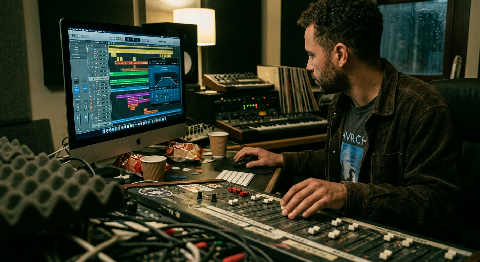
How to Become a Music Producer in the UK
Music producers shape recordings from idea to finished track. You might program beats and arrange songs in a DAW such as Ableton Live, Logic Pro or FL Studio, record and direct artists, choose sounds, edit performances and mix, working in your own studio, a commercial studio or remotely with artists.
There is no set route and no qualification is required. Most producers spend years making music, collaborating with artists and building credits before earning a living. Income in the first years is often very low, so many combine production with teaching, engineering, mixing or other work.
Quick facts
- Starting salary
- £0 - £15,000 (year 1)
- Mid-career salary
- £25,000 - £60,000
- Senior salary
- £80,000 - £500,000+
- Work environment
- Studio, often nights
- Time to entry
- 3 - 7 years
- Degree required
- Not required
- Category
- Marketing and Media
Compare pay across careers in the UK salaries by career report. Also in: High-paying careers, No-degree careers, Creative careers, Career change.
What a Music Producer does
Shape recorded music - arranging, producing, mixing and helping artists realise their sound.
How to become a music producer in the UK
No licence or qualification is needed. Some producers take a music production or music technology course at college or university, which gives you studio access and contacts. Others are self-taught. Either way, learn one DAW in depth, plus arrangement, sound design and mixing, and finish lots of tracks. Work with artists to build credits, and learn the business side: agreeing fees, splits and producer points in writing, and joining PRS for Music if you co-write songs. Assisting in a studio or working as a sound engineer is another way in.
- Learn one DAW in depth, such as Ableton Live, Logic Pro or FL Studio, and finish complete tracks rather than leaving loops unfinished.
- Study arrangement, sound design, recording and mixing, and compare your work against released tracks in the genres you want to produce.
- Set up a basic home studio: a computer, an audio interface, monitors or good headphones and a microphone, then treat your room's acoustics.
- Produce for local artists, rappers and bands, cheaply at first if needed, to build credits, references and a portfolio of released work.
- Agree fees, splits and producer points in writing before release, and join PRS for Music if you co-write the songs you produce.
- Release music, share your work on streaming and social platforms, and network at studios, open mics, showcases and industry events.
- Consider a music production course or studio assistant role if you want structured feedback, studio access and contacts.
| Route | How long | Cost | Best for |
|---|---|---|---|
| Self-taught with a home studio | 3-7 years to steady income | Low to moderate; equipment and software | Self-motivated creators |
| Music production or music technology degree | 3 years | Tuition fee loan | Studio access and contacts |
| College course in music technology | 1-2 years | Free for many under-19s; otherwise varies | School leavers wanting the basics |
| Studio assistant or runner | 1-3 years | Low pay at first | Learning from established producers |
How long it takes
Expect three to seven years of producing, collaborating and building credits before music production becomes a steady income for most people.
Music Producer salary in the UK
Income for music producers varies more than in most careers. In the first year many earn £0 to £15,000 from production and rely on other work. Working producers with regular clients, sync placements or staff roles earn about £25,000 to £60,000, and a small number with hit records earn £80,000 to £500,000 or more. Income comes from fees, royalties from producer points, and publishing if you co-write, so your credits, genre and deal terms matter most.
Key skills
- DAW
- Arrangement
- Mixing
- Artist communication
Music Producer FAQs
How do I become a music producer in the UK?
Learn a DAW such as Ableton, Logic or FL Studio, finish lots of tracks, and produce for real artists to build credits. A music production course can help, but most producers get work through their portfolio, collaborations and reputation.
Do I need a degree to be a music producer?
No. There is no required qualification for music production. A degree or college course in music production gives you structured learning, studio time and contacts, but artists and labels care about how your records sound.
How much does a music producer earn in the UK?
In the first year many producers earn £0 to £15,000 from music. Working producers earn about £25,000 to £60,000, and a few with major hits earn £80,000 to £500,000 or more. Most earn from a mix of fees, royalties and publishing.
How do music producers get paid royalties?
Producers usually agree a fee plus points, a percentage of recording royalties, with the artist or label. If you co-write the song, you also earn publishing royalties, collected through PRS for Music. Always agree splits in writing before a track is released.
Is Music Producer right for you?
Career Compass ranks careers from your interests and priorities and explains every suggestion, with UK routes and trade-offs. See how well Music Producer actually fits you. £19.99 once, full report included.
Comparing music producer with other careers? A career quiz gives you a type; a proper assessment gives you reasons, routes and trade-offs.