How to become an occupational therapist
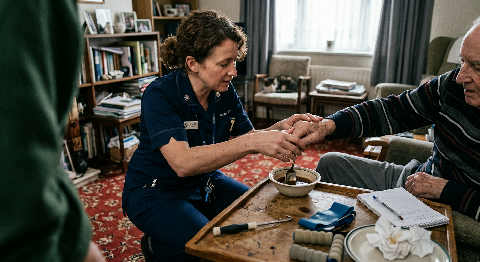
Occupational therapists help people of all ages carry out everyday activities after illness, injury or disability, or while living with a long-term condition. You might assess someone's ability to wash, dress and cook after a stroke, recommend equipment and home adaptations, help a person with mental health problems back into work, or support a child's development at school.
Occupational therapist is a protected title, so you must complete an HCPC-approved qualification and register with the Health and Care Professions Council before you can practise. Many people gain experience first as a healthcare assistant or occupational therapy assistant.
Quick facts
- Starting salary
- £28,000 - £35,000
- Mid-career salary
- £37,000 - £48,000
- Senior salary
- £50,000 - £70,000+
- Work environment
- Hospital, community, care home, school
- Time to entry
- 3 - 4 years
- Degree required
- Yes (HCPC-approved OT degree)
- Category
- Healthcare and Care
Compare pay across careers in the UK salaries by career report. Also in: Stable careers.
What a Occupational Therapist does
Help people recover or adapt the daily activities they need or want to do after illness, injury or disability.
How to become an occupational therapist in the UK
You need an HCPC-approved occupational therapy qualification. The options are a BSc in Occupational Therapy, usually three years full time in England, Wales and Northern Ireland and four in Scotland; a two-year accelerated master's for graduates in other subjects; or an occupational therapist degree apprenticeship with an NHS or social care employer. All include supervised practice placements. Eligible students in England can apply to the NHS Learning Support Fund. Once you qualify, register with the HCPC, and consider joining the Royal College of Occupational Therapists (RCOT).
- Check each university's entry requirements, which often ask for A levels or an Access to Higher Education Diploma, and sometimes a science subject.
- Gain experience in health or social care, for example as a healthcare assistant, care worker or occupational therapy assistant, or by volunteering.
- Apply for an HCPC-approved BSc in Occupational Therapy, a two-year accelerated master's if you already have a degree, or an OT degree apprenticeship.
- Apply to the NHS Learning Support Fund if eligible, which gives students in England a non-repayable training grant on top of student finance.
- Complete at least 1,000 hours of practice placements across settings such as hospitals, community teams, mental health services and schools.
- Register with the HCPC when you graduate, then apply for Band 5 posts on NHS Jobs, or roles with councils, charities and private providers.
- Choose a specialism, such as neurology, paediatrics, mental health, hand therapy or housing adaptations, and build towards Band 6 and 7 roles.
| Route | How long | Cost | Best for |
|---|---|---|---|
| BSc Occupational Therapy | 3 years (4 in Scotland) | Tuition fee loan; NHS Learning Support Fund in England | School leavers and career changers |
| Accelerated pre-registration master's | 2 years | Student loans often available | Graduates in other subjects |
| Occupational therapist degree apprenticeship | About 3-4 years | Paid by the employer | Support staff already in the NHS or social care |
| OT assistant role first | 6-24 months | Paid | Testing the job before training |
How long it takes
Expect three to four years to qualify through a degree or apprenticeship, or two years through an accelerated master's if you already hold a degree.
Occupational Therapist salary in the UK
Newly qualified occupational therapists usually start on around £28,000 to £35,000, on Band 5 in the NHS. With experience in specialist Band 6 roles, pay rises to about £37,000 to £48,000, and advanced practitioners, team leads and consultant OTs earn £50,000 to £70,000 or more. NHS pay follows Agenda for Change scales, which rise most years, with extra for London. Councils, private rehabilitation firms and independent practice set their own rates.
Key skills
- Assessment
- Communication
- Problem solving
- Patience
- Goal setting
Will occupational therapists be replaced by AI?
Low exposure. No. Occupational therapy means assessing people in their own homes and lives and helping them adapt. AI may help with reports and equipment recommendations, not the relationship or the judgement.
What AI already does in this job
- Assessment reports
- Equipment and adaptation recommendations
What stays with a person
- Home visits and practical assessment
- Working with patients and families on goals
- HCPC-registered judgement
Strong demand across the NHS and social care, and low exposure.
Related careers that are also hard to automate
- Physiotherapist - hands-on rehabilitation
- Speech and Language Therapist - allied health with one-to-one therapy
- Care Coordinator - organises care around the person
More on AI and work: check another job, jobs AI will replace, AI-proof jobs.
Our rating judges how much of the role's everyday work current AI tools can already do or draft; it measures exposure, not job losses. Occupation findings are from the Department for Education, The impact of AI on UK jobs and training (November 2023).
Occupational Therapist FAQs
How do I become an occupational therapist in the UK?
Complete an HCPC-approved occupational therapy degree, accelerated master's or degree apprenticeship, including practice placements, then register with the Health and Care Professions Council. You can then apply for Band 5 posts in the NHS, councils or private practice.
Do I need a degree to be an occupational therapist?
Yes. Occupational therapist is a protected title, so you need an HCPC-approved degree-level qualification and HCPC registration. Without one, you can work as an occupational therapy assistant, which is a good way to gain experience.
How much does an occupational therapist earn in the UK?
Newly qualified OTs earn around £28,000 to £35,000, usually on NHS Band 5. Experienced specialists earn about £37,000 to £48,000, and advanced practitioners and team leads reach £50,000 to £70,000 or more.
What is the difference between an occupational therapist and a physiotherapist?
Physiotherapists focus mainly on movement, strength and physical function. Occupational therapists focus on the everyday activities a person needs or wants to do, such as washing, cooking, working or going to school, and adapt tasks, equipment or surroundings to make them possible.
Related careers
Is Occupational Therapist right for you?
Career Compass ranks careers from your interests and priorities and explains every suggestion, with UK routes and trade-offs. See how well Occupational Therapist actually fits you. £19.99 once, full report included.
Not sure occupational therapist is the right career for you? A good career test narrows the field before you spend money retraining.