How to Become a Podcast Editor in the UK
Podcast editors turn raw recordings into finished episodes. You cut mistakes and dead air, balance levels between speakers, reduce background noise, add music and sound effects, and export files that meet each platform's loudness and format requirements. Some editors also produce video versions and short clips for social media.
There is no required qualification. Most people get in by learning audio editing software, building a portfolio of edited episodes and finding clients or in-house roles with production companies, broadcasters and brands.
Quick facts
- Starting salary
- £24,000 - £32,000
- Mid-career salary
- £36,000 - £55,000
- Senior salary
- £60,000 - £90,000
- Work environment
- Office, studio or remote
- Time to entry
- 1 - 3 years
- Degree required
- Not required - portfolio matters most
- Category
- Marketing and Media
Compare pay across careers in the UK salaries by career report. Also in: High-paying careers, No-degree careers, Creative careers, Career change.
What a Podcast Editor does
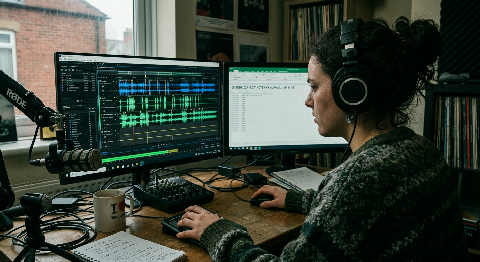
Edit podcasts - cut tape, mix sound, add music and ship polished episodes to schedule.
How to become a podcast editor in the UK
Clients and employers hire on the quality of your edits, so a portfolio matters more than certificates. Many editors teach themselves using digital audio workstations such as Adobe Audition, Reaper, Pro Tools or Logic Pro, or text-based tools such as Descript. A Level 3 qualification or degree in music technology, sound engineering or media production gives you a structured grounding and access to studios. Most work is freelance, so you need to register as self-employed with HMRC. In-house roles exist at podcast production companies, broadcasters and media agencies, but they are competitive.
- Learn one digital audio workstation properly, such as Reaper, Adobe Audition or Pro Tools, including multitrack editing, EQ, compression and noise reduction.
- Record and edit a short podcast of your own or with friends, so you have before-and-after examples of your work to show clients.
- Offer to edit a few episodes for a small local or community podcast to build real credits and a testimonial.
- Learn platform delivery standards, including loudness targets, file formats, metadata and chapter markers, so episodes sound consistent everywhere.
- Add basic video editing for video podcasts and short social clips, as many clients now want both from one editor.
- Set up a simple portfolio site, register as self-employed with HMRC, and approach independent podcasters and production companies with tailored samples.
| Route | How long | Cost | Best for |
|---|---|---|---|
| Self-taught with a portfolio | 6-18 months | Software costs, some tools free | Career changers and side projects |
| Music technology or sound engineering course | 1-3 years | Free under 19, otherwise varies or tuition fee loan | Structured technical training |
| Junior role at a production company | 1-3 years | Paid role | Learning professional workflows in a team |
How long it takes
With focused practice, you can be editing paid episodes within months. Building a steady freelance income or landing an in-house role usually takes one to three years.
Podcast Editor salary in the UK
Podcast editors usually start on around £24,000 to £32,000, or a similar income from freelance work once you have regular clients. Experienced editors earn £36,000 to £55,000, and senior editors can reach £60,000 to £90,000, often by moving into a podcast producer role or running a small editing studio. Freelance income depends on your rates, how many shows you edit each week and whether you offer extras such as video and show notes. Brand and agency clients usually pay more than independent podcasters.
Key skills
- Logic / Pro Tools / Adobe
- Sound design
- Pacing
- Show structure
- Reliability
Podcast Editor FAQs
How do I become a podcast editor in the UK?
Learn an audio editing program, edit sample episodes, then build credits by working with small podcasts. Put before-and-after examples on a simple website and approach podcasters and production companies directly. Most editors start freelance and grow through referrals.
Do you need a qualification to edit podcasts?
No. Clients and employers judge you on how your edits sound. A music technology, sound engineering or media course can help you learn the technical side and get studio experience, but plenty of working editors are self-taught.
How much do podcast editors earn in the UK?
Starting pay is around £24,000 to £32,000. Experienced editors earn £36,000 to £55,000, and senior editors or studio owners can earn £60,000 to £90,000. Freelance income depends on your rates and how many regular shows you edit.
Will AI tools replace podcast editors?
AI tools now handle tasks such as transcripts, filler-word removal and basic levelling, which makes simple editing faster and cheaper. Clients still pay for judgement: story structure, pacing, sound design and rescuing difficult audio. Editors who use these tools well can take on more work.
Is Podcast Editor right for you?
Career Compass ranks careers from your interests and priorities and explains every suggestion, with UK routes and trade-offs. See how well Podcast Editor actually fits you. £19.99 once, full report included.
Still deciding whether podcast editor is the career for you? Here is which career test is actually worth taking, and what a free quiz will not tell you.