How to Become a Radiographer in the UK
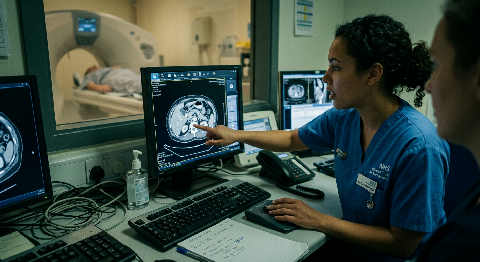
Radiographers are registered healthcare professionals. Diagnostic radiographers use X-ray, CT, MRI and fluoroscopy to produce images that help doctors diagnose injury and disease. Therapeutic radiographers plan and deliver radiotherapy to treat cancer, supporting patients through each course of treatment.
Radiographer is a protected title, so you must complete an approved degree or degree apprenticeship and register with the Health and Care Professions Council (HCPC) before you can practise. Most newly qualified radiographers start in NHS hospitals on Agenda for Change Band 5.
Quick facts
- Starting salary
- £28,000 - £35,000
- Mid-career salary
- £37,000 - £48,000
- Senior salary
- £50,000 - £75,000+
- Work environment
- Hospital imaging or radiotherapy department
- Time to entry
- 3 years
- Degree required
- Yes (HCPC-approved radiography degree)
- Category
- Healthcare and Care
Compare pay across careers in the UK salaries by career report. Also in: Stable careers, Career change.
What a Radiographer does
Use imaging like X-ray, MRI and CT to diagnose, or radiotherapy to treat cancer.
- Diagnostic Radiographer - Capture imaging used for diagnosis (X-ray, MRI, CT).
- Therapeutic Radiographer - Plan and deliver radiotherapy for cancer patients.
How to become a radiographer in the UK
Take an HCPC-approved degree in diagnostic radiography or therapeutic radiography, usually three years full time, or four in Scotland. Graduates in a related subject can take a two-year pre-registration MSc. In England, diagnostic and therapeutic radiographer degree apprenticeships let NHS employees qualify while paid, and some people work first as an imaging support worker or healthcare assistant. Universities usually ask for A levels or equivalent including a science. Eligible students in England can get at least £5,000 a year from the NHS Learning Support Fund. After graduating you register with the HCPC, and many radiographers join the Society of Radiographers.
- Decide between diagnostic radiography, which focuses on imaging, and therapeutic radiography, which delivers radiotherapy, as they are separate degrees.
- Check entry requirements at HCPC-approved universities, typically A levels or equivalent including a science such as biology or physics.
- Arrange a visit to a hospital imaging or radiotherapy department and use what you learned in your personal statement and interview.
- Complete your degree, pre-registration MSc or degree apprenticeship, including clinical placements across different hospital departments.
- Apply for the NHS Learning Support Fund if you study in England, and check the student support available in Scotland, Wales or Northern Ireland.
- Register with the HCPC as soon as you graduate, then apply for Band 5 radiographer posts and preceptorship programmes in NHS trusts.
- Once settled, specialise through postgraduate training in an area such as CT, MRI, mammography, ultrasound or advanced radiotherapy practice.
| Route | How long | Cost | Best for |
|---|---|---|---|
| BSc in diagnostic or therapeutic radiography | 3 years (4 in Scotland) | Tuition fee loan, plus NHS support in England | School leavers |
| Pre-registration MSc | 2 years | Postgraduate fees, student support may apply | Graduates in a related subject |
| Radiographer degree apprenticeship | About 3-4 years | Paid by employer | NHS staff such as imaging support workers |
How long it takes
It usually takes 3 years to qualify through a full-time degree, or 2 years through a pre-registration MSc if you already have a relevant degree. You can start work as soon as you are on the HCPC register.
Radiographer salary in the UK
Newly qualified radiographers usually earn around £28,000 to £35,000 on NHS Agenda for Change Band 5. With experience and a specialism such as CT, MRI or radiotherapy planning, pay typically rises to £37,000 to £48,000. Advanced practitioners, consultant radiographers and department managers can earn £50,000 to £75,000 or more. On-call and out-of-hours payments, and high cost area supplements in and around London, increase earnings. Private imaging providers and agency locum work can pay differently from the NHS.
Key skills
- Imaging tech
- Anatomy
- Patient care
- Radiation safety
- Attention to detail
Radiographer FAQs
How do I become a radiographer in the UK?
Complete an HCPC-approved degree in diagnostic or therapeutic radiography, a pre-registration MSc or a radiographer degree apprenticeship. Then register with the HCPC and apply for Band 5 posts, usually in the NHS.
Do you need a degree to be a radiographer?
Yes. Radiographer is a protected title, so you need an HCPC-approved degree, MSc or degree apprenticeship and HCPC registration. You can work as an imaging support worker without a degree, but you cannot call yourself a radiographer.
How much do radiographers earn?
Newly qualified radiographers usually earn £28,000 to £35,000 on Band 5. Experienced and specialist radiographers typically earn £37,000 to £48,000, and advanced practitioners, consultants and managers £50,000 to £75,000 or more.
What is the difference between a diagnostic and a therapeutic radiographer?
Diagnostic radiographers produce images such as X-rays, CT and MRI scans to help diagnose illness and injury. Therapeutic radiographers plan and give radiotherapy to treat cancer and support patients through treatment. They are separate degrees, so choose before you apply.
Related careers
Is Radiographer right for you?
Career Compass ranks careers from your interests and priorities and explains every suggestion, with UK routes and trade-offs. See how well Radiographer actually fits you. £19.99 once, full report included.
Comparing radiographer with other careers? A career quiz gives you a type; a proper assessment gives you reasons, routes and trade-offs.