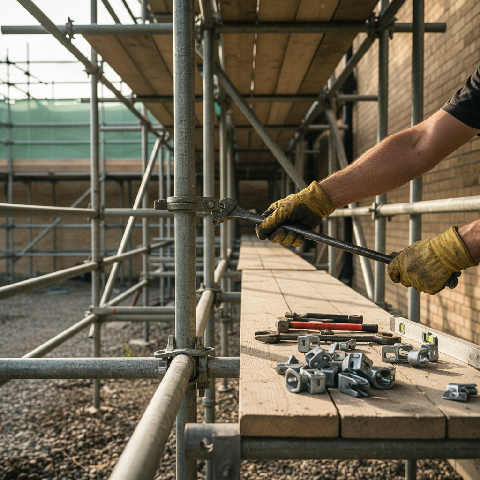
How to Become a Scaffolder (UK): Salary, Skills & Career Guide
Scaffolding is one of the fastest ways to start earning in the trades without a degree. Many people go from zero experience to paid work within months, and experienced scaffolders can earn £40,000-£60,000+, or more if self-employed.
In this guide, you'll learn exactly how to become a scaffolder in the UK, what you can expect to earn, and whether it's the right fit for you.
Quick facts
- Starting salary
- £24,000 - £28,000
- Mid-career salary
- £32,000 - £45,000
- Senior salary
- £50,000 - £70,000 (advanced/supervisor)
- Work environment
- Outdoors, all sites and weather
- Time to entry
- 1 - 3 years (CISRS card)
- Degree required
- Not required
- Category
- Engineering, Construction and Infrastructure
Compare pay across careers in the UK salaries by career report. Also in: No-degree careers, Career change.
What a Scaffolder does
Erect and dismantle scaffolding for construction and maintenance projects.
- Advanced Scaffolder - Complex scaffolding designs and supervision on big sites.
How to become a scaffolder in the UK
There's no single fixed route into scaffolding, but the path most people take is straightforward: get on a site as a labourer, work towards your CISRS card, and build up to qualified scaffolder over 1-3 years.
- Pass the CITB Health, Safety and Environment test, which you need before you can get a CSCS or CISRS labourer card and work on site.
- Get taken on by a scaffolding contractor as a labourer, carrying tube, boards and fittings while you learn how a scaffold goes up and comes down.
- Ask your employer to book you onto CISRS Part 1, the course that gets you a CISRS Trainee Scaffolder card. Many people hold a CISRS Labourer card first.
- Log at least six months of on-site experience as a trainee, then complete CISRS Part 2 to build on what you learned in Part 1.
- Complete the Scaffolding Skills Test and an NVQ Level 2 in scaffolding to earn your CISRS Scaffolder card.
- Work towards CISRS Advanced Scaffolder, then add scaffold inspection training if you want to move into supervisor or inspector roles.
| Route | How long | Cost | Best for |
|---|---|---|---|
| Start as a labourer, train through CISRS | 1-3 years to Scaffolder card | Usually paid by the employer | Earning from day one with no qualifications |
| Level 2 scaffolding apprenticeship | About 2 years | Paid by the employer | School-leavers who want structured training |
| Move across from general site work | 1-2 years | Course fees vary, CITB grants may help employers | Existing CSCS card holders in construction |
How most people actually get started
Most people don't follow a formal path into scaffolding. A common route is starting as a labourer on a construction site, then learning on the job and working towards a CSCS card and CISRS training. If you can show up reliably, work hard, and stay safe, you'll get noticed quickly - this trade rewards consistency more than credentials.
How long it takes
You can be earning as a scaffolding labourer within a few weeks once you have passed the health and safety test and got your labourer card. Reaching a CISRS Scaffolder card typically takes 1 to 3 years, and Advanced Scaffolder status takes further experience and training on top.
Scaffolder salary in the UK
Scaffolder pay in the UK climbs faster than most people expect. Trainees and labourers start around £24,000-£28,000, qualified scaffolders typically earn £32,000-£45,000, and advanced scaffolders or supervisors push into £50,000-£70,000. Self-employed scaffolders running their own work can earn more again.
Is scaffolder a good career?
Scaffolding can be a strong career choice in the UK if you want to earn well without a degree and don't mind hard, outdoor work. Demand is steady wherever construction is happening, competition for skilled scaffolders is low, and there's a clear ladder from labourer to advanced scaffolder to supervisor or self-employed contractor. The honest trade-off: it's tough on the body over decades, and the weather is brutal in winter.
Key skills
- Physical fitness
- Head for heights
- Teamwork
- Safety awareness
Scaffolder FAQs
How do I become a scaffolder with no experience?
Start by getting onto a construction site as a labourer - this is the most common entry route. From there, work towards your CSCS card so you can stay on site, then apply for CISRS Part 1 training to become a trainee scaffolder. After 1-3 years of on-site experience plus your CISRS modules, you'll be a qualified scaffolder. No prior experience or qualifications are needed to start.
How much do scaffolders earn per day in the UK?
Day rates for scaffolders in the UK typically run £120-£250 per day, depending on experience, location, and whether you hold a CISRS Advanced card. Trainees sit at the lower end, qualified scaffolders mid-range, and advanced scaffolders or self-employed contractors at the top. London and the South East generally pay the best day rates.
Is scaffolding hard work?
Yes - scaffolding is physically demanding. You'll be lifting heavy tubes and boards, climbing, working at height, and out in all weather including rain, cold, and heat. Early starts and long days are normal. Most scaffolders say they prefer it to office work because it's active and hands-on, but it's not a career for anyone who wants an easy day.
Do scaffolders need qualifications?
You don't need a degree, but you do need a CISRS card to work as a qualified scaffolder on most UK sites. The standard route is CISRS Part 1, then on-site experience, then Part 2, eventually working up to CISRS Advanced. You'll also need a CSCS card to be on a construction site at all. Apprenticeships are available but most scaffolders learn on the job.
Is scaffolding a good career?
Scaffolding is a strong career if you want to earn well without going to university and you're happy doing physical, outdoor work. Demand is consistent, competition is low compared with office careers, and there's a clear earnings ladder from labourer to advanced scaffolder to self-employed contractor. The trade-offs are the physical toll over time and the weather. Career Compass, our one-off career direction assessment, shows how closely it matches your interests and priorities.
Is Scaffolder right for you?
Career Compass ranks careers from your interests and priorities and explains every suggestion, with UK routes and trade-offs. See how well Scaffolder actually fits you. £19.99 once, full report included.
Not sure scaffolder is the right career for you? A good career test narrows the field before you spend money retraining.