How to Become a Sign Maker in the UK
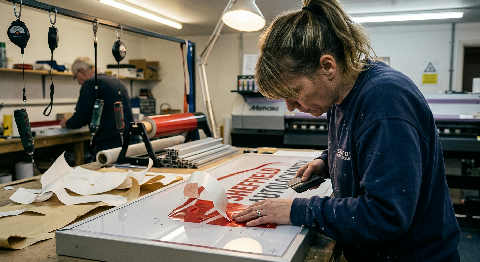
Sign makers design, produce and install signs for shops, offices, vehicles, exhibitions and building sites. A typical week might include cutting and applying vinyl lettering, printing and laminating large-format graphics, building illuminated or fabricated signs, wrapping a van and fitting a shop fascia from a ladder or access platform. The job mixes design software, workshop craft and on-site installation.
There is no required qualification. Most sign makers learn on the job at a sign company, starting as a trainee or production assistant, and become fully skilled in 1 to 3 years.
Quick facts
- Starting salary
- £24,000 - £28,000
- Mid-career salary
- £30,000 - £42,000
- Senior salary
- £48,000 - £65,000
- Work environment
- Workshop + on-site fitting
- Time to entry
- 1 - 3 years
- Degree required
- Not required - portfolio matters most
- Category
- Marketing and Media
Compare pay across careers in the UK salaries by career report. Also in: No-degree careers, Creative careers, Career change.
What a Sign Maker does
Design, build and install signage for shops, vehicles, exhibitions and buildings.
How to become a sign maker in the UK
The usual route is a trainee, apprentice or production assistant job with a sign or print company, where you learn vinyl cutting, weeding and application, large-format printing and installation. A Level 3 course in graphic design or art and design helps with the design side, and knowing Adobe Illustrator or sign software makes you more useful from day one. Some sign and print companies take on apprentices. Installers often need working at height training such as IPAF for powered access platforms and PASMA for mobile towers, plus a CSCS card for construction sites. The British Sign and Graphics Association is the main trade body.
- Learn Adobe Illustrator or CorelDRAW so you can set up vector artwork, as cutters and printers need clean files sized to the millimetre.
- Apply for trainee sign maker, production assistant or apprentice roles at local sign and print companies, and take a few photos of any practical work you have done.
- Master the workshop basics: cutting, weeding and applying vinyl without bubbles, printing and laminating graphics, and fixing panels to signs and frames.
- Learn vehicle wrapping through on-the-job practice or a wrap course, as van and fleet livery is a big part of many sign companies' work.
- Get IPAF and PASMA training and a CSCS card if you will install signs at height or on construction sites.
- Build a portfolio of installed signs and wraps, then specialise or go self-employed once you can price, produce and fit jobs on your own.
| Route | How long | Cost | Best for |
|---|---|---|---|
| Trainee or production assistant at a sign company | 1-3 years | Paid while you learn | Practical people with no experience |
| Apprenticeship with a sign or print company | About 1-2 years | Paid by the employer | School-leavers wanting a structured start |
| Graphic design course, then sign company | 1-3 years | Often free for under-19s, otherwise varies | People who want to focus on sign design |
How long it takes
You can start as a trainee straight away with no qualifications, and most people are fully skilled within 1 to 3 years. Setting up on your own usually takes longer, as you need equipment and a customer base.
Sign Maker salary in the UK
Trainee sign makers usually earn around £24,000 to £28,000. Skilled sign makers and installers earn £30,000 to £42,000, and senior makers, workshop managers or experienced wrap specialists can earn £48,000 to £65,000. Self-employed sign makers and wrap installers set their own prices, so income depends on your skills, equipment and steady trade customers. Installation work at height, illuminated signs and vehicle wrapping usually pay more than basic vinyl work.
Key skills
- Vinyl cutting
- Print production
- Vehicle livery
- Installation
- Customer comms
Sign Maker FAQs
How do I become a sign maker?
Get a trainee, apprentice or production assistant role at a sign company and learn vinyl, print and installation on the job. Learn design software such as Adobe Illustrator, and get working at height training if you will install signs.
Do you need qualifications to be a sign maker?
No formal qualification is required. Employers value practical skills, a good eye for layout and design software experience. A graphic design or art course helps, and IPAF, PASMA and CSCS cards are often needed for installation work.
How much does a sign maker earn?
Trainees usually earn around £24,000 to £28,000. Skilled sign makers earn £30,000 to £42,000, and senior makers, managers or wrap specialists can earn £48,000 to £65,000. Self-employed income depends on your prices and regular customers.
Can I start a sign making business from home?
Many small sign businesses start with a vinyl cutter and design software at home or in a small unit, doing vinyl lettering and small graphics. Larger work needs a large-format printer, laminator and workshop space, plus public liability insurance for installations.
Is Sign Maker right for you?
Career Compass ranks careers from your interests and priorities and explains every suggestion, with UK routes and trade-offs. See how well Sign Maker actually fits you. £19.99 once, full report included.
Still deciding whether sign maker is the career for you? Here is which career test is actually worth taking, and what a free quiz will not tell you.