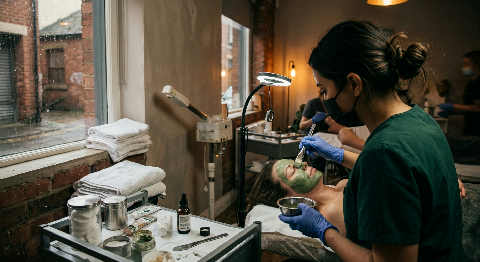
How to Become a Skincare Specialist in the UK
Skincare specialists assess clients' skin, recommend products and routines, and deliver treatments such as facials, chemical peels and other advanced skin treatments. You might work in a salon or clinic, on a brand counter in a department store, in a spa, or for yourself. Selling products and rebooking clients is a big part of most roles.
You do not need a degree. Most people start with a Level 2 or Level 3 beauty therapy qualification or a retail skincare advisor job with brand training, then add advanced skin courses as they gain experience. Some go on to work alongside an aesthetic practitioner in a clinic.
Quick facts
- Starting salary
- £24,000 - £27,000
- Mid-career salary
- £30,000 - £40,000
- Senior salary
- £45,000 - £60,000
- Work environment
- Clinic, salon, retail
- Time to entry
- 6 - 18 months
- Degree required
- Not required
- Category
- Beauty and Aesthetics
Compare pay across careers in the UK salaries by career report. Also in: No-degree careers, Career change.
What a Skincare Specialist does
Run skincare consultations and treatments and recommend personalised regimens to clients.
How to become a skincare specialist in the UK
For treatment work, take a Level 2 then Level 3 beauty therapy qualification at college, with a private training provider, or through a beauty therapy apprenticeship. Look for awarding bodies such as VTCT, City & Guilds or CIBTAC. Advanced treatments, such as stronger chemical peels and microneedling, usually need further training at Level 4 or above, and insurers check what you hold before covering you. For retail skincare advice, brands train new consultants themselves. If you work for yourself, you need public liability and treatment insurance, and in some areas, including London, a special treatment licence from your local council.
- Take a Level 2 beauty therapy qualification covering facials, skin analysis and hygiene, then a Level 3 for electrical and more advanced facial treatments.
- Alternatively, apply for a skincare advisor or beauty consultant job on a brand counter, where the brand trains you in its products and consultations.
- Practise skin analysis: identify skin types and conditions, record consultations and contraindications, and track results with photos taken with the client's consent.
- Add advanced courses, such as chemical peels, LED or microneedling, only from providers whose certificates your insurer accepts.
- Arrange insurance and, if you work for yourself, check with your local council whether you need a special treatment licence for your premises.
- Build ingredient knowledge, such as retinoids, acids and SPF, so you can explain clearly why you recommend each product in a routine.
- Know when to refer: clients with changing moles, severe acne or signs of infection should see a GP or dermatologist rather than be treated.
| Route | How long | Cost | Best for |
|---|---|---|---|
| Level 2 and 3 beauty therapy course | 1-2 years | Free at college for many under-19s; otherwise varies | Treatment-focused salon and clinic work |
| Beauty therapy apprenticeship | 12-24 months | Paid by the employer | Earning while you train in a salon |
| Brand counter or retail skincare advisor | Weeks to start | Paid; brand training provided | Product and sales-focused roles |
| Advanced skin courses after Level 3 | Days to months | Varies by provider | Moving into clinic and advanced treatments |
How long it takes
You can start on a brand counter within weeks, and most people reach treatment roles within six to 18 months after completing Level 2 and Level 3 beauty therapy training.
Skincare Specialist salary in the UK
Skincare specialists usually start on around £24,000 to £27,000, often with commission on products and treatments. Experienced therapists and senior clinic staff earn about £30,000 to £40,000, and clinic managers, brand trainers and busy self-employed specialists can reach £45,000 to £60,000. Your income depends on commission structures, how many advanced treatments you offer, rebooking rates and location. Self-employed income varies most, because you also pay for rent, insurance, products and equipment.
Key skills
- Skin analysis
- Product knowledge
- Sales
- Consultation
Skincare Specialist FAQs
How do I become a skincare specialist in the UK?
Take a Level 2 and Level 3 beauty therapy qualification, or start as a retail skincare advisor with brand training. Build experience in skin analysis and facials, then add advanced skin courses that your insurer recognises.
What qualifications do I need to be a skincare specialist?
There is no legal minimum for basic skincare advice, but salons and clinics usually want a Level 2 or Level 3 beauty therapy qualification. Advanced treatments such as peels and microneedling normally need further Level 4 or higher training before insurers will cover you.
How much does a skincare specialist earn in the UK?
Starting pay is around £24,000 to £27,000, often with commission. Experienced specialists earn about £30,000 to £40,000, and clinic managers, trainers or established self-employed specialists can reach £45,000 to £60,000.
What is the difference between a skincare specialist and an aesthetic practitioner?
Skincare specialists focus on skin analysis, facials, peels and product advice. Aesthetic practitioners usually also offer injectable treatments such as anti-wrinkle injections, which use prescription-only medicines and need a prescriber, so many are nurses, doctors or dentists.
Is Skincare Specialist right for you?
Career Compass ranks careers from your interests and priorities and explains every suggestion, with UK routes and trade-offs. See how well Skincare Specialist actually fits you. £19.99 once, full report included.
Not sure skincare specialist is the right career for you? A good career test narrows the field before you spend money retraining.