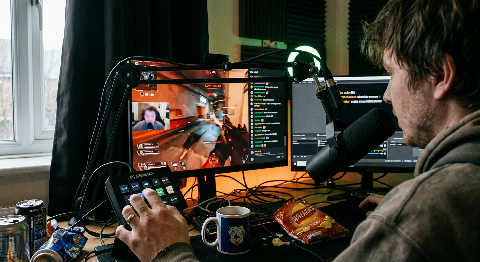
How to Become a Streamer in the UK
Streamers broadcast live on platforms such as Twitch, YouTube and Kick, playing games, chatting with viewers or covering a niche like art, music or cooking. Income comes from subscriptions, donations, platform ad revenue, sponsorships and sometimes merchandise, and it only arrives once you have a regular audience.
There is no qualification or set route. Most streamers start part-time alongside a job, stream on a fixed schedule for months, and build a community before earning anything meaningful. Only a small share of streamers ever earn a full-time income, so treat it as a long-term project.
Quick facts
- Starting salary
- £0 - £4,000 (year 1)
- Mid-career salary
- £15,000 - £60,000
- Senior salary
- £100,000 - £500,000+
- Work environment
- Home setup, evening / late hours common
- Time to entry
- 18 - 36 months
- Degree required
- Not required
- Category
- Self-Employed and Business Owner
Compare pay across careers in the UK salaries by career report. Also in: High-paying careers, No-degree careers, Creative careers, Career change.
What a Streamer does
Build a community via live streaming on Twitch, YouTube or Kick - games, just-chatting or specialist niches.
How to become a streamer in the UK
You need no qualifications, but you do need reliable upload speed, a decent microphone, a camera if you show your face, and broadcasting software such as OBS Studio. Choose one main platform, stream to a consistent schedule and reach its monetisation thresholds, such as Twitch Affiliate or YouTube's partner programme. Once you earn money, register as self-employed with HMRC and file a Self Assessment tax return if your income goes above the £1,000 trading allowance. Sponsored content must be clearly labelled as advertising under UK rules enforced by the ASA and CMA.
- Pick a niche you can stream about for hundreds of hours, such as one game genre, speedrunning, art or just-chatting, rather than whatever is trending this week.
- Set up a basic stream with OBS Studio, a good USB microphone and stable upload speed, and test audio levels before worrying about cameras or overlays.
- Stream on a fixed, published schedule several times a week, as regular viewers come back for consistency more than production quality.
- Clip your best moments into short videos for YouTube Shorts and TikTok, a common way for new viewers to discover small streamers.
- Work towards Twitch Affiliate or the equivalent monetisation tier on your platform, then add subscriptions, channel memberships and donation links.
- Register as self-employed with HMRC once you earn over £1,000 a year, and keep records of income and equipment costs for your tax return.
- Label sponsored streams and affiliate links clearly as ads, following ASA and CMA guidance for influencers, before you approach brands for deals.
| Route | How long | Cost | Best for |
|---|---|---|---|
| Part-time alongside a job | 18-36 months to meaningful income | Equipment, a few hundred pounds upwards | Most new streamers |
| Full-time from the start | Varies widely | Savings to cover living costs | People with savings and an existing audience |
| Move across from another creator platform | Often quicker with an audience | Low | Creators with a YouTube or TikTok following |
How long it takes
You can start streaming the same day with free software. Building an audience large enough to earn a meaningful income usually takes 18 to 36 months of consistent streaming, and many people never reach that point.
Streamer salary in the UK
Streaming income is unpredictable. In the first year most streamers earn between nothing and around £4,000. Established streamers with a loyal community earn roughly £15,000 to £60,000, and the biggest names can earn £100,000 to £500,000 or more from subscriptions, sponsorships and appearances, often alongside work as a YouTuber. What drives income is audience size, how many viewers subscribe or donate, and sponsorship deals. As a self-employed streamer you pay your own tax and National Insurance and get no sick pay or employer pension.
Key skills
- On-camera presence
- Community moderation
- Streaming tech
- Resilience
Streamer FAQs
How do I become a streamer in the UK?
Pick a niche, set up free software such as OBS Studio with a good microphone, and stream on a regular schedule. Share clips on short-form platforms to grow, reach your platform's monetisation tier, and register as self-employed with HMRC once you earn money.
Do I need any qualifications to be a streamer?
No. There are no required qualifications or licences. What matters is on-camera presence, consistency, basic streaming tech skills and the ability to build a community. Some streamers take media or video courses, but audiences don't ask about them.
How much do streamers earn in the UK?
Most earn little or nothing at first, with year one usually somewhere between £0 and £4,000. Established streamers earn around £15,000 to £60,000, and the top streamers £100,000 to £500,000 or more, mainly from subscriptions, donations and sponsorships.
Do streamers have to pay tax in the UK?
Yes. Donations, subscriptions, ad revenue and sponsorships are generally treated as trading income. If your self-employed income is over £1,000 a year, register with HMRC as self-employed and file a Self Assessment tax return.
Is Streamer right for you?
Career Compass ranks careers from your interests and priorities and explains every suggestion, with UK routes and trade-offs. See how well Streamer actually fits you. £19.99 once, full report included.
Still deciding whether streamer is the career for you? Here is which career test is actually worth taking, and what a free quiz will not tell you.