How to Become a Chemist in the UK
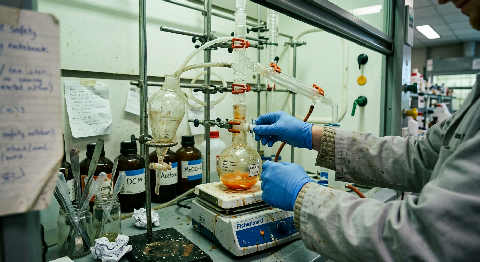
Chemists study, make and test chemicals and materials. Depending on the job, you might develop new drug molecules, check that medicines or food meet quality standards, analyse samples with chromatography and spectroscopy, improve industrial processes, or create new materials. Others use the same skills as a forensic scientist or in environmental testing. Most chemists work in laboratories in pharmaceutical, energy, food, consumer goods, water or manufacturing companies.
You almost always need a chemistry degree. Many research jobs ask for an integrated master's or a PhD, while quality control and analytical roles often take graduates straight from a bachelor's degree.
Quick facts
- Starting salary
- £24,000 - £32,000
- Mid-career salary
- £35,000 - £55,000
- Senior salary
- £60,000 - £95,000+
- Work environment
- Lab and office, regulated industries
- Time to entry
- 3 - 5 Years
- Degree required
- Yes (chemistry degree, often with MSc/PhD)
- Category
- Education, Science and Research
Compare pay across careers in the UK salaries by career report. Also in: High-paying careers, Stable careers.
What a Chemist does
Research, develop and analyse chemicals and materials - in pharma, energy, food or manufacturing.
- Analytical Chemist - Test composition and quality of materials and products.
- Medicinal Chemist - Design and synthesise new drug molecules.
How to become a chemist in the UK
The standard route is a chemistry degree accredited by the Royal Society of Chemistry (RSC): a 3-year BSc or 4-year integrated MChem in England, Wales and Northern Ireland, with courses a year longer in Scotland. You will usually need A levels or equivalent in chemistry and another science or maths. Research and development roles often need a PhD. Without a degree, you can start as a laboratory technician through a Level 3 apprenticeship and progress through the Level 6 laboratory scientist degree apprenticeship. The RSC offers professional registration, including Chartered Chemist (CChem), as your career develops.
- Take A levels or equivalent in chemistry plus maths, biology or physics, which most chemistry degrees ask for.
- Choose an RSC-accredited chemistry degree, ideally with a year in industry or a research placement, as lab experience makes you much more employable.
- Get confident with analytical instruments such as HPLC, GC, mass spectrometry and NMR, and list the ones you have used on your CV.
- Apply for graduate analytical, quality control or formulation chemist roles in pharmaceutical, food, water and chemical companies.
- Consider a PhD if you want to lead research, particularly in medicinal chemistry or materials, where senior research posts usually expect one.
- Work towards Chartered Chemist status with the Royal Society of Chemistry once you have several years of professional experience.
| Route | How long | Cost | Best for |
|---|---|---|---|
| Chemistry BSc or MChem | 3-4 years (4-5 in Scotland) | Tuition fee loan | Most graduate chemists |
| Laboratory technician apprenticeship (Level 3) | About 2 years | Paid by the employer | School leavers |
| Laboratory scientist degree apprenticeship (Level 6) | About 4-5 years | Paid by the employer | Earning a degree while working |
| PhD after your degree | 3-4 years | Often a funded studentship | Research and development roles |
How long it takes
Most chemists start their first graduate job after a 3 to 4 year degree, or 4 to 5 years in Scotland. A PhD adds another 3 to 4 years if you want to lead research.
Chemist salary in the UK
Graduate chemists typically start on around £24,000 to £32,000. With several years' experience, pay usually rises to £35,000 to £55,000, and senior scientists, principal chemists or lab managers can earn £60,000 to £95,000 or more. Pharmaceutical and energy companies tend to pay more than food or contract testing labs. A PhD often means a higher starting point in research roles, and moving into management or regulatory work can increase pay.
Key skills
- Lab technique
- Analytical instruments
- Statistics
- Health and safety
- Report writing
Chemist FAQs
How do I become a chemist in the UK?
Take chemistry A levels or equivalent, complete an RSC-accredited chemistry degree, and apply for graduate analytical, quality control or research roles. A PhD helps for research posts. Without a degree, a laboratory apprenticeship is an alternative route.
Do you need a degree to be a chemist?
For most chemist jobs, yes. You can start without one as a laboratory technician through a Level 3 apprenticeship, then take the Level 6 laboratory scientist degree apprenticeship to reach chemist-level roles while being paid.
How much does a chemist earn in the UK?
Graduate chemists typically earn around £24,000 to £32,000, rising to £35,000 to £55,000 with experience. Senior and principal chemists or lab managers can earn £60,000 to £95,000 or more, mostly in pharmaceutical and energy companies.
Is a chemist the same as a pharmacist?
No. In everyday UK speech, the chemist often means a pharmacy, but pharmacists are a separate regulated profession. They need an accredited MPharm degree and registration with the General Pharmaceutical Council, or the Pharmaceutical Society of Northern Ireland. Chemists work in labs and industry.
Related careers
Is Chemist right for you?
Career Compass ranks careers from your interests and priorities and explains every suggestion, with UK routes and trade-offs. See how well Chemist actually fits you. £19.99 once, full report included.
Comparing chemist with other careers? A career quiz gives you a type; a proper assessment gives you reasons, routes and trade-offs.