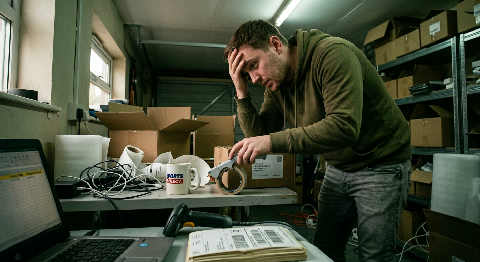
How to Become a Dropshipping Business Owner in the UK
Dropshipping business owners run online shops where a supplier stores the stock and ships each order straight to the customer. You choose products, build the store, usually on Shopify, write product pages, run paid ads on Meta or TikTok, handle customer service and refunds, and manage cash flow between ad spend, supplier costs and payouts. You never hold stock, but you are still the seller in law.
Anyone can start and set-up costs are low, but many new stores lose money at first. Treat the early months as testing products and ads with a fixed budget you can afford to lose.
Quick facts
- Starting salary
- £0 - £10,000 (year one - mostly reinvested in ads)
- Mid-career salary
- £25,000 - £70,000 net
- Senior salary
- £100,000 - £500,000+ net (top operators)
- Work environment
- Fully remote
- Time to entry
- 1 - 6 months to first sale
- Degree required
- Not required
- Category
- Self-Employed and Business Owner
Compare pay across careers in the UK salaries by career report. Also in: High-paying careers, No-degree careers, Career change.
What a Dropshipping Business Owner does
Run a Shopify store where suppliers ship orders directly to customers - you focus on marketing.
- One-Product Store Operator - Single-product Shopify store driven by paid ads.
- Print on Demand Operator - Sell custom-printed apparel, mugs and homewares with no inventory.
How to become a dropshipping business owner in the UK
No qualification is needed. Set up a store, find reliable suppliers, ideally with UK or EU stock for faster delivery, and order samples to check quality before you list anything. Register with HMRC as a sole trader or set up a limited company, and keep records of every sale and ad cost. You must register for VAT if your taxable turnover passes £90,000, and check how import VAT and customs apply to goods shipped from overseas. Because you are the seller, UK consumer law applies to you: customers have a 14-day cancellation right on most online orders, and goods must be as described, safe and of satisfactory quality.
- Pick a niche and test product ideas with real demand, checking reviews, competitors and your margin after ad costs, refunds and payment fees.
- Order samples from several suppliers, compare quality and delivery times to UK addresses, and favour suppliers with UK or EU stock.
- Build a simple Shopify store with clear delivery times, a returns policy, contact details and accurate product descriptions.
- Register with HMRC, open a separate business bank account and track every sale, ad cost and refund so you know your real profit.
- Set a fixed testing budget for Meta or TikTok ads, learn to read cost per purchase and return on ad spend, and drop losing products quickly.
- Check UK product safety and labelling rules for your category, especially electricals, toys and cosmetics, and avoid items you cannot legally sell.
- Keep cash aside for payment provider reserves and payout delays, as fast growth can leave you short of money for ads and suppliers.
| Route | How long | Cost | Best for |
|---|---|---|---|
| Start a store alongside a job | 1-6 months to first sale | A few hundred pounds for testing | Testing without quitting |
| Learn e-commerce in a job first | 1-2 years | No direct cost | People wanting skills before risking money |
| Print on demand store | Weeks to launch | Low, you pay per order | Designers avoiding stock risk |
| Single-product brand store | 3-12 months | Higher ad budget | Operators who have found a proven product |
How long it takes
You can open a store within days, and most people make a first sale within one to six months. Building steady profit usually takes longer, and not every store gets there, so a job as an e-commerce manager is a steadier way to learn the skills first.
Dropshipping Business Owner salary in the UK
Most dropshipping owners earn little in year one, typically £0 to £10,000, with most of the money reinvested in ads and product testing. Owners who find reliable products and profitable ads can earn around £25,000 to £70,000 net. A small number of top operators make £100,000 to £500,000 or more net, usually by building a brand with repeat customers rather than chasing short-lived trends. Revenue figures can be misleading, as ad costs, refunds, chargebacks and payment fees take a large share.
Key skills
- Shopify
- Facebook / TikTok ads
- Product research
- Customer service basics
- Cashflow
Dropshipping Business Owner FAQs
How do I start dropshipping in the UK?
Choose a niche, test suppliers with sample orders, build a Shopify store with clear delivery and returns policies, and register with HMRC. Start ads with a fixed budget, track your real profit after ad spend and refunds, and follow UK consumer law as the seller.
Is dropshipping legal in the UK?
Yes. Dropshipping is legal, but you are the seller, so consumer law, product safety rules and advertising standards apply to you, not just your supplier. You must also declare your income to HMRC and register for VAT if your turnover passes the threshold.
How much do dropshippers earn in the UK?
In year one most earn £0 to £10,000, as profits go back into ads. Established store owners can earn around £25,000 to £70,000 net, and a small number of top operators make £100,000 to £500,000 or more net.
Do I need a limited company to dropship?
No. You can start as a sole trader by registering for Self Assessment with HMRC. Many owners set up a limited company once profits grow, for tax or liability reasons, and an accountant can tell you when switching makes sense for you.
Related careers
Is Dropshipping Business Owner right for you?
Career Compass ranks careers from your interests and priorities and explains every suggestion, with UK routes and trade-offs. See how well Dropshipping Business Owner actually fits you. £19.99 once, full report included.
Comparing dropshipping business owner with other careers? A career quiz gives you a type; a proper assessment gives you reasons, routes and trade-offs.