How to Become a Game Artist in the UK
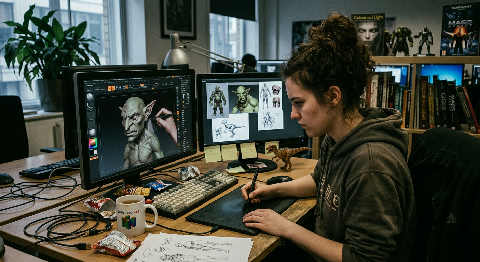
Game artists create the visual content players see: characters, environments, props, textures, interface art and effects. In a studio you might model and texture assets in Maya or Blender and Substance Painter, sculpt in ZBrush, and get them working in a game engine such as Unreal or Unity within strict technical budgets. The job overlaps with a 3D artist or concept artist, but everything must run in real time.
No degree is required, but competition for junior roles is strong. Studios hire on a portfolio and an art test, so the realistic route is to pick a specialism, learn the industry tools and build polished, game-ready work.
Quick facts
- Starting salary
- £26,000 - £38,000
- Mid-career salary
- £42,000 - £65,000
- Senior salary
- £70,000 - £100,000
- Work environment
- Office, studio or remote
- Time to entry
- 1 - 3 years
- Degree required
- Not required - portfolio matters most
- Category
- Marketing and Media
Compare pay across careers in the UK salaries by career report. Also in: High-paying careers, No-degree careers, Creative careers, Career change.
What a Game Artist does
Create characters, environments and assets for video games across genres and platforms.
How to become a game artist in the UK
There is no formal qualification or licence. Many game artists take a degree in games art, games design, animation or a related subject, which gives you time, feedback and links with studios. Others teach themselves with online courses and free tools such as Blender and Unreal Engine. Focus on one specialism, such as environment, character, prop, UI or technical art, and show game-ready assets with sensible polygon counts, texture sets and in-engine screenshots. Game jams and modding are good ways to get team experience. Junior artist, QA tester and outsourcing studio roles are common ways into the industry.
- Pick a specialism, such as environment, character, prop, UI or VFX art, and study the portfolios of artists already doing that job.
- Learn the core tools: Maya or Blender, ZBrush, Substance Painter and Designer, and Unreal Engine or Unity for presenting work in-engine.
- Build game-ready pieces with sensible polygon counts, clean UVs and PBR textures, and show breakdowns with wireframes and texture maps.
- Take part in game jams or student game projects to show you can work with designers and programmers and hit a deadline.
- Put four to six polished projects on ArtStation, then apply for junior artist roles and internships, and expect an art test.
- Consider outsourcing studios and QA tester roles, which hire more juniors and can be a route into a development studio's art team.
| Route | How long | Cost | Best for |
|---|---|---|---|
| Games art or games design degree | 3 years | Tuition fee loan | School leavers wanting structure |
| Self-taught with online courses | 1-3 years | Low; many tools are free | Disciplined career changers |
| QA or outsourcing studio role, then move across | 1-2 years | Paid | Getting into the industry first |
How long it takes
Most people take one to three years of focused practice, through a degree or self-study, to build a portfolio that wins a junior game artist role.
Game Artist salary in the UK
Junior game artists usually earn around £26,000 to £38,000. Mid-level artists with shipped titles earn about £42,000 to £65,000, and senior, lead and principal artists reach roughly £70,000 to £100,000. Larger studios and publishers tend to pay more than small indies. Studio clusters such as London, Guildford, Leamington Spa, Manchester, Brighton and Dundee offer the most roles, and some studios hire for remote or hybrid work.
Key skills
- Maya / Blender
- Substance
- Anatomy
- Lighting
- Iteration
Game Artist FAQs
How do I become a game artist in the UK?
Choose a specialism, learn tools such as Maya or Blender, ZBrush, Substance and Unreal Engine, and build a portfolio of game-ready assets. Then apply for junior artist roles, internships and outsourcing studios, and prepare for art tests.
Do I need a degree to be a game artist?
No. Studios judge you on your portfolio and art test. A games art degree gives structure, feedback and studio contacts, but plenty of game artists are self-taught or move across from QA and other roles.
How much does a game artist earn in the UK?
Junior game artists earn around £26,000 to £38,000. Mid-level artists earn about £42,000 to £65,000, and senior or lead artists reach roughly £70,000 to £100,000, with larger studios usually paying more than small indies.
What is the difference between a game artist and a game developer?
Game artists create the visual assets, such as characters, environments and textures. Game developer usually means a programmer who builds the game's systems and features, though the term is sometimes used for anyone working in game development.
Is Game Artist right for you?
Career Compass ranks careers from your interests and priorities and explains every suggestion, with UK routes and trade-offs. See how well Game Artist actually fits you. £19.99 once, full report included.
Not sure game artist is the right career for you? A good career test narrows the field before you spend money retraining.