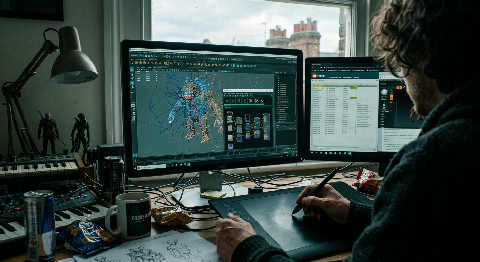
How to become a 3d artist
3D artists build the models, textures and lighting that appear in video games, films, adverts, product visualisations and AR/VR experiences. Day to day you might sculpt a character in ZBrush, model a building in Blender or Maya, paint textures in Substance Painter and set up renders, working to briefs from a lead artist or art director.
No degree is required. Studios hire on your portfolio, so the realistic route is to learn the software, specialise in environments, characters or product work, and build a body of polished pieces before applying for junior roles.
Quick facts
- Starting salary
- £24,000 - £35,000
- Mid-career salary
- £40,000 - £65,000
- Senior salary
- £70,000 - £110,000+
- Work environment
- Studio or remote, project-based
- Time to entry
- 2 - 4 years
- Degree required
- Not required - portfolio is everything
- Category
- Design and Creative
Compare pay across careers in the UK salaries by career report. Also in: High-paying careers, No-degree careers, Creative careers, Career change.
What a 3D Artist does
Model, texture and light 3D assets for games, film, product viz and AR/VR.
- Environment Artist - Build worlds and environments for games and film.
- Character Artist - Sculpt and texture characters for games and film.
How to become a 3d artist in the UK
There is no licence or required qualification. Many 3D artists take a degree in games art, 3D animation, computer animation or visual effects, which gives you structured feedback and studio contacts. Others are self-taught, using free software such as Blender and online courses. Whichever route you take, aim for three to six finished portfolio pieces in one specialism, show your wireframes and texture maps, and post them on ArtStation. Some artists start in neighbouring roles, such as junior animator or QA tester, and move across once their portfolio is strong enough.
- Learn one main 3D package, Blender, Maya or 3ds Max, plus ZBrush for sculpting and Substance Painter for texturing, by finishing small projects end to end.
- Choose a specialism, such as environment art, character art, hard-surface modelling or product visualisation, so your portfolio reads clearly to a recruiter.
- Study the fundamentals studios test for: topology, UV unwrapping, PBR texturing, lighting and composition, ideally with feedback from working artists in online communities.
- Build three to six finished portfolio pieces with breakdowns showing wireframes, texture maps and real-time renders in Unreal Engine or Unity where relevant.
- Post your work on ArtStation and apply for junior and graduate artist roles, art tests and studio internships, leading with the pieces closest to each studio's style.
- Consider a games art, animation or VFX degree if you want structured feedback, placements and industry contacts while you build your portfolio.
| Route | How long | Cost | Best for |
|---|---|---|---|
| Self-taught with online courses | 1-3 years | Low; Blender is free | Self-motivated career changers |
| Games art, animation or VFX degree | 3 years | Tuition fee loan | School leavers wanting structure and contacts |
| Adjacent junior role (QA, junior animator, 2D) | 1-3 years | Paid | Getting into a studio first |
How long it takes
Most people need two to four years of steady practice, through a degree or self-study, before their portfolio is strong enough for a junior 3D artist role.
3D Artist salary in the UK
Junior 3D artists usually earn around £24,000 to £35,000. With a few shipped projects, mid-level artists earn roughly £40,000 to £65,000, and senior, lead or principal artists reach £70,000 to £110,000 or more. Games, film VFX and high-end product visualisation tend to pay more than small agencies. Studio clusters such as London, Guildford and Leamington Spa offer more roles, and freelancers charge day rates that vary widely with workload and reputation.
Key skills
- Blender, Maya or 3ds Max
- Texturing (Substance)
- Lighting
- Composition
- Render engines
3D Artist FAQs
How do I become a 3D artist in the UK?
Learn a core package such as Blender or Maya alongside texturing tools, pick a specialism, and build a focused portfolio of finished pieces. Then apply for junior roles and art tests at games, VFX and visualisation studios. A degree helps but is not required.
Do I need a degree to be a 3D artist?
No. Studios judge you on your portfolio and how you perform in an art test. A degree in games art, animation or VFX can speed up learning and give you contacts, but many working 3D artists are self-taught.
How much does a 3D artist earn in the UK?
Junior 3D artists earn around £24,000 to £35,000. Mid-level artists earn about £40,000 to £65,000, and senior or lead artists reach £70,000 to £110,000 or more, with games and film VFX usually paying more than small agencies.
Is Blender good enough to get a job as a 3D artist?
Yes for learning, and many visualisation studios and smaller games teams use it. Larger games and VFX studios often use Maya, so learning the basics of Maya as well makes you more flexible when you apply.
Related careers
Is 3D Artist right for you?
Career Compass ranks careers from your interests and priorities and explains every suggestion, with UK routes and trade-offs. See how well 3D Artist actually fits you. £19.99 once, full report included.
Comparing 3d artist with other careers? A career quiz gives you a type; a proper assessment gives you reasons, routes and trade-offs.