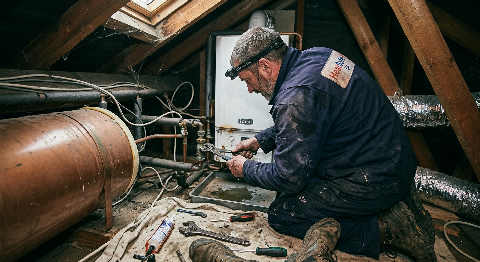
How to Become an HVAC Technician in the UK
HVAC technicians install, service and repair heating, ventilation, air conditioning and refrigeration systems. You might fit split air-con units in offices, maintain chillers and air handling units in hospitals or data centres, service commercial fridges and cold rooms, or install heat pumps in homes. Much of the job is fault finding: reading pressures and temperatures, checking electrical controls and working out why a system isn't performing.
Most technicians train through an apprenticeship. You need an F-Gas certificate before you can work on systems containing fluorinated refrigerants, which are controlled by law.
Quick facts
- Starting salary
- £22,000 - £30,000 (apprentice/junior)
- Mid-career salary
- £32,000 - £45,000
- Senior salary
- £50,000 - £75,000+ (or self-employed)
- Work environment
- On-site at commercial and domestic premises
- Time to entry
- 2 - 4 years (apprenticeship + F-Gas)
- Degree required
- Not required - apprenticeship route
- Category
- Skilled Trades
Compare pay across careers in the UK salaries by career report. Also in: No-degree careers, Career change.
What a HVAC Technician does
Install, service and repair heating, ventilation, air-con and refrigeration systems.
- Commercial Air-Con Engineer - Service and install commercial AC and chillers.
- Heat Pump Installer - Install air- and ground-source heat pumps for homes and businesses.
How to become an HVAC technician in the UK
The main route is the Level 3 Refrigeration, Air Conditioning and Heat Pump (RACHP) Engineering Technician apprenticeship, which usually takes about three years and includes F-Gas certification. Adults can take college courses and then an F-Gas qualification, such as the City & Guilds 2079 Category 1 certificate. Your employer must also hold F-Gas company certification. Ventilation and ductwork roles have their own building services apprenticeships. Working on gas appliances requires Gas Safe registration, and heat pump installers often work for MCS-certified companies.
- Aim for GCSE maths, English and science at grade 4 or above, as many RACHP apprenticeships ask for them and the work involves calculations and electrical theory.
- Apply for the Level 3 RACHP Engineering Technician apprenticeship with air conditioning, refrigeration or building services contractors.
- Learn the refrigeration cycle, brazing, pressure testing and evacuation, and practise reading wiring diagrams for controls and compressors.
- Pass an F-Gas Category 1 certificate so you can legally handle refrigerants on air conditioning, refrigeration and heat pump systems.
- Get site essentials such as a CSCS card and IPAF or PASMA training, as many commercial jobs involve working at height.
- Specialise in commercial air conditioning, refrigeration, data centre cooling or heat pumps, and add manufacturer training on the brands your employer installs.
- Once experienced, consider moving into commissioning, service management or self-employment, which needs your own F-Gas company certification.
| Route | How long | Cost | Best for |
|---|---|---|---|
| Level 3 RACHP apprenticeship | About 3 years | Paid by the employer | School leavers and new entrants |
| College course plus F-Gas certificate | 1-2 years | Varies by provider | Adults paying their own way in |
| Electrician or plumber retraining | 6-18 months | F-Gas course fees vary by provider | Tradespeople adding air-con or heat pump skills |
| Armed forces technician | 6-12 months | Resettlement funding may help | Service leavers with mechanical or electrical skills |
How long it takes
An apprenticeship typically takes about three years, and most people are working as qualified technicians within two to four years. Experienced electricians or plumbers can move across faster by adding F-Gas certification and air conditioning training, and some go on to specialise as a heat pump installer.
HVAC Technician salary in the UK
Apprentices and junior HVAC technicians typically earn around £22,000 to £30,000. Qualified technicians earn £32,000 to £45,000, and senior engineers, commissioning specialists and self-employed technicians can earn £50,000 to £75,000 or more. Overtime, call-out rotas and a company van add to the package. Commercial refrigeration, data centre and healthcare work often pays more than domestic installs, and London and the South East usually pay the highest rates.
Key skills
- Refrigeration cycle
- Electrical basics
- Pipework
- F-Gas certification
- Fault finding
HVAC Technician FAQs
How do I become an HVAC technician in the UK?
Most people complete a Level 3 RACHP Engineering Technician apprenticeship, which takes about three years and includes F-Gas certification. Adults can take a college course and an F-Gas qualification, then join a contractor as a trainee. Specialising in air conditioning, refrigeration or heat pumps helps you progress.
Do I need F-Gas to work on air conditioning?
Yes. You need an F-Gas certificate to install, service or repair equipment containing fluorinated refrigerant gases, and the business you work for needs F-Gas company certification. The City & Guilds 2079 Category 1 certificate is a widely used qualification for technicians.
How much does an HVAC technician earn in the UK?
Apprentices and juniors typically earn £22,000 to £30,000. Qualified technicians earn £32,000 to £45,000, and senior or self-employed technicians can earn £50,000 to £75,000 or more. Overtime, call-outs and commercial specialisms push pay up.
Is HVAC a good trade to get into?
It can be. Air conditioning, refrigeration and heat pump work all need F-Gas-qualified people, and heat pump installation is growing as homes move away from gas boilers. Expect site work in all conditions, call-outs and regular work at height.
Related careers
Is HVAC Technician right for you?
Career Compass ranks careers from your interests and priorities and explains every suggestion, with UK routes and trade-offs. See how well HVAC Technician actually fits you. £19.99 once, full report included.
Comparing HVAC technician with other careers? A career quiz gives you a type; a proper assessment gives you reasons, routes and trade-offs.