How to Become a Pilot in the UK
Airline pilots fly passenger and cargo aircraft as part of a two-person crew. Before each flight you check the weather, the route, the fuel and the aircraft's paperwork with your captain, then share the flying and the radio work, follow standard procedures and handle anything unexpected calmly. Most new pilots join an airline as a first officer on a short-haul jet such as an Airbus A320 or Boeing 737, and become a captain after several years.
You do not need a degree. You do need a Class 1 medical certificate, a commercial pilot licence with an instrument rating, and a way to pay for training, which is the biggest hurdle: TonyKnows career data puts self-funded training at around £80,000 to £120,000. This guide explains the routes from first lesson to first airline job, how long each takes, the costs, and what pilots earn in the UK.
Quick facts
- Starting salary
- £24,000 - £40,000 (first officer)
- Mid-career salary
- £60,000 - £100,000
- Senior salary
- £120,000 - £200,000 (captain)
- Work environment
- Cockpit, varied schedules, away from home
- Time to entry
- 2 - 3 years training (£80k-£120k)
- Degree required
- Not required (ATPL training)
- Category
- Transport and Logistics
Compare pay across careers in the UK salaries by career report. Also in: High-paying careers, No-degree careers, Career change.
What a Pilot does
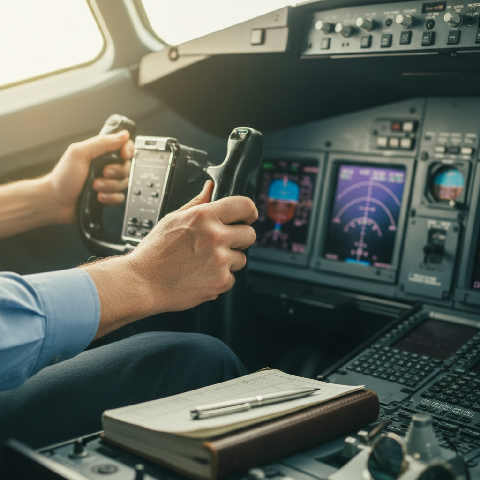
Fly commercial, cargo, or private aircraft.
How to become a pilot in the UK
Start with the medical. Airline pilots need a Class 1 medical certificate from a UK Civil Aviation Authority (CAA) approved aeromedical centre, and you should get it before you spend money on training, because some conditions rule you out.
There are three ways to train. On an integrated course you study full-time at one flight school from zero experience to a frozen ATPL in around two years. On the modular route you take each stage separately, often while working: a Private Pilot Licence (PPL), hour building, the ATPL theory exams, then the Commercial Pilot Licence (CPL), multi-engine instrument rating and multi-crew training. Modular training can cost less and be spread over time, but it takes discipline. The third route is an airline cadet scheme, where an airline selects trainees and partners with a flight school. Some schemes are fully funded by the airline, such as British Airways' Speedbird Pilot Academy, while others are self-funded but come with a conditional job offer. Places on funded schemes are very competitive.
Every route ends with a frozen ATPL: you hold a commercial licence and have passed the airline transport pilot theory, and the full ATPL is issued once you have built up enough flying hours as a first officer. Your first airline then trains you on its aircraft type through a type rating. Standard student loans do not cover flight training, so self-funding trainees usually rely on savings, family help or private loans.
- Get a CAA Class 1 medical certificate from an approved aeromedical centre before you spend money on training.
- Book a trial lesson and a pilot aptitude assessment with a flight school to check you enjoy flying and have the ability to pass airline selection.
- Choose your route: an airline cadet scheme, a full-time integrated course or the modular route, and work out exactly how you will pay for it.
- Pass the ATPL theory exams and build your flying hours, through an integrated course or a PPL and hour building on the modular route.
- Complete your Commercial Pilot Licence, multi-engine instrument rating and multi-crew or airline pilot standards training to finish with a frozen ATPL.
- Apply for first officer jobs, pass airline selection, then complete the type rating for the aircraft your airline flies.
- Build hours as a first officer until your ATPL is unfrozen, then work towards command as a captain.
| Route | How long | Cost | Best for |
|---|---|---|---|
| Airline cadet scheme | Around 2 years | Fully funded on some schemes; self-funded with a conditional job offer on others | Strong candidates who pass airline selection |
| Integrated ATPL course | Around 18 months to 2 years full-time | Self-funded; often the most expensive route | People who can train full-time and want one structured course |
| Modular training | 18-36 months, often part-time | £80,000-£120,000+ in TonyKnows career data, paid stage by stage | Career changers training while they work |
How most people actually get started
Most career changers start with the medical and a trial lesson, then take the modular route, keeping their job while they earn a PPL and pass the theory exams. School leavers and graduates with strong maths, physics and aptitude test scores often apply to every airline cadet scheme first, because a funded place removes the cost. Whichever route you take, read each scheme's selection stages and bonding terms carefully, and check how many of a flight school's recent graduates found airline jobs.
How long it takes
Training usually takes around 2 years on an integrated course or cadet scheme, and 18 months to 3 years on the modular route, from first lesson to frozen ATPL. Finding a first officer job and completing a type rating can add several months on top.
Pilot salary in the UK
In TonyKnows career data, first officers start on around £24,000 to £40,000, experienced first officers and short-haul pilots earn around £60,000 to £100,000, and captains earn around £120,000 to £200,000. Pay depends heavily on the airline, the aircraft size and your seniority, and many airlines add allowances for each sector or night away. Newly qualified pilots often spend their early years paying back training loans or bonds, so the first few years can be financially tight.
Is pilot a good career?
Flying suits people who are calm, disciplined and happy following procedures, and who can take regular checks on their performance in their stride. Pay rises steeply with seniority, the licence is respected worldwide, and airline pilots can fly until 65. The trade-offs are the cost or competition to get trained, a roster-driven life with time away from home, and an industry that slows hiring during downturns.
Key skills
- Discipline
- Calm under pressure
- Spatial awareness
- Decision making
Will pilots be replaced by AI?
Low exposure. Not in any foreseeable career. Aircraft already fly on automation for much of a flight, but pilots manage the systems, handle the unexpected and carry legal command of the aircraft. Regulators and passengers are a long way from accepting no pilot on board.
What AI already does in this job
- Routine flight phases already handled by autopilot
- Flight planning and performance calculations
- Some monitoring and checklist tasks
What stays with a person
- Command of the aircraft and legal responsibility
- Handling emergencies and unusual situations
- Crew leadership and decision-making under pressure
Pilot is one of the lower-exposure careers on the site. The bigger risks to the career are cost of training and cyclical airline hiring, not AI.
Related careers that are also hard to automate
- Air Traffic Controller - safety-critical aviation role with strong demand
- Flight Dispatcher - operational planning with an aviation background
- Aviation Safety Officer - uses flying experience to improve safety
More on AI and work: check another job, jobs AI will replace, AI-proof jobs.
Our rating judges how much of the role's everyday work current AI tools can already do or draft; it measures exposure, not job losses. Occupation findings are from the Department for Education, The impact of AI on UK jobs and training (November 2023).
Pilot FAQs
How do I become a pilot in the UK?
Get a CAA Class 1 medical, then train to a frozen ATPL through an airline cadet scheme, a full-time integrated course or the modular route. Once you have your commercial licence and instrument rating, apply for first officer jobs and complete a type rating on your airline's aircraft.
How much does it cost to become a pilot in the UK?
TonyKnows career data puts self-funded training at around £80,000 to £120,000 or more, depending on the school and route. Some airline cadet schemes are fully funded, and standard student loans do not cover flight training.
How long does it take to become a pilot?
Around 2 years on an integrated course or cadet scheme, and 18 months to 3 years on the modular route. Add a few months for job applications and type rating training before you fly passengers.
Do you need a degree to be a pilot?
No. Airlines want a frozen ATPL, a Class 1 medical and good aptitude test results, not a degree. Strong maths and physics help with the theory exams, and most cadet schemes ask for good GCSEs or equivalent.
How much do pilots earn in the UK?
TonyKnows career data puts first officers at around £24,000 to £40,000 to start, experienced pilots at around £60,000 to £100,000, and captains at around £120,000 to £200,000. Pay depends on the airline, aircraft and seniority.
Is Pilot right for you?
Career Compass ranks careers from your interests and priorities and explains every suggestion, with UK routes and trade-offs. See how well Pilot actually fits you. £19.99 once, full report included.
Not sure pilot is the right career for you? A good career test narrows the field before you spend money retraining.